Showing posts with label Lovell. Show all posts

Monday, December 27, 2021

INDUSTRIAL WOLVES IN ENVIRONMENTALIST SHEEP'S CLOTHING?


“Too cheap to meter” was a claim made by proponents of nuclear power plants to generate electricity in the 1950s. We’ve since learned that was wildly optimistic. Since then we’ve heard similar pie-in-the-sky claims made by proponents of “renewable energy” touting wind and solar electric generating projects in Maine and just about everywhere else. “It’s free; it’s limitless; it’s clean," and so forth.


Those power sources can work so long as the wind is blowing and the sun is shining. They don’t generate anything during calm, still nights, however, when people still need electricity. The old-fashioned, nuclear and fossil-fuel generators have to back up production of electricity at these times. Wind farms can also be very noisy, kill a lot of birds, and they can be unsightly as well protruding up to 650 feet above the hilltops on which they’re usually sited. The same people who enjoy looking at paintings of quaint, Dutch windmills can be put off seeing hills covered by enormous, modern windmills.


Lately we’re learning the drawbacks of industrial solar farms already built, under construction, and proposed in Maine. They’re noisy. They’re huge: The one proposed for Lovell would cover and area twice the size of the one in Fryeburg. Walden Renewables, the firm that got the enormous Fryeburg project approved, has sold it to a Canadian firm while it’s still being built. They promise, however, they wouldn’t do that to Lovell and we can trust them, right?


Lately we’re learning that solar panels are built in China using slaves. Even those built in Vietnam and elsewhere have in them key components like polysilicon produced in Xinjiang Province using Uyghur Muslim forced labor. Just this week, President Biden signed a bipartisan bill banning imports from Xinjiang Province that was opposed by Apple and Nike. Good for him. Does that ban include solar panels? I certainly hope so.


Back in 1986 we here in Lovell learned about one of the downsides of nuclear power when the US Department of Energy proposed burying highly radioactive spent fuel rods in the granite “batholith” that underlies southern Maine between Lovell and the City of Westbrook. However, within three months of the DOE’s proposal the Chernobyl nuclear power plant melted down in Russia’s Ural Mountains. That was only seven years after the Three Mile Island meltdown in Pennsylvania and the nuclear industry took a big hit. Within weeks, the US Department of Energy scrapped their plans for a nuclear waste dump in Maine.


One thing I don’t understand about Maine leftists is their opposition to the Clean Energy Corridor and their orchestration of its defeat on a recent referendum. The now-defunct corridor proposal would use an already-existing passageway for its power lines over most of its route and bring surplus hydroelectricity from a facility on Canada’s Hudson Bay. Quebec Hydro is a renewable power source. Yes, some additional trees would be cut to expand the corridor, but the operation produces no emissions. Isn’t zero emissions what the left wants?


We all depend on a reliable supply of electricity and we’re rudely reminded of that every time there is a power failure. It is in our interest to keep the supply steady and we should understand that renewable sources, with the possible exception of hydroelectricity, are not reliable. They’re intermittent and we need back-up sources. Nuclear power is close to 100% reliable and while it too has its drawbacks, like how to safely dispose of the waste, but it may well be our best choice at this point.


Meanwhile we have Walden Renewables LLC posing as Lovell’s best choice. It will produce no emissions; it will reduce our electric bills; it will provide tax revenue. But we have so ask ourselves: Is Walden really an industrial wolf in environmentalist sheep’s clothing?


“My, what big fields of solar panels you have,” we say. “The better to serve you with,” says Walden. “How ugly they are,” we say. “They’re only visible from 0.14% of the town,” says Walden. “What huge piles of waste you’ll leave when you’re gone,” we say. “We’ve included decommissioning costs in our proposal,” says Walden. But we don’t know what those costs will be in thirty years,” we say. “We’ve planned for that,” says Walden. “But there are toxic materials in your panels,” we say. “We’ll take care of those,” says Walden.


“And then three’s this,” says Walden. “Sheep can graze under our solar panels. We’ll even plant special, nutritious grass for them! It’s all in our proposal.”


Walden Renewables. It sounds so Thoreau-like, doesn’t it? With a name like that, we can trust them, right?


Monday, December 13, 2021

DOWNSIDE OF SOLAR ENERGY


Lovell’s old Town Hall was packed, standing room only. I wasn’t sure what to expect when I arrived but energy permeated the room. If any present supported the proposed location of 170,000 solar panels in rural Lovell, Maine by Walden Renewables LLC, they were silent. Five people representing the company were the only ones to utter anything positive, but then they were paid to do that. No one spoke in favor. 


From the Portland Press Herald


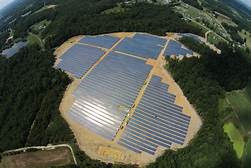
No one spoke against solar energy either. Rather, they objected to where Walden Renewables wanted to put row after row of their big, ugly, black panels. In the 100 square miles of Lovell, the company chose a venue that would ruin one of the nicest mountain views in our picturesque town. One hundred eighty acres of carbon-consuming trees would be clearcut and replaced with 170,000 solar panels, ostensibly to mitigate climate change.  It would also mar the vista along Christian Hill Road where I happen to live. The photo above depicts only 30,000 panels. The one proposed for Lovell would be five or six times that.


My backyard - Solar panels would fill the hillside below the mountains


It was gratifying to hear how many people describe how beautiful the views are from Christian Hill — how when traveling north or south through Lovell, they choose to drive our road instead of Route 5, the main north/south thoroughfare through town. It’s a slower, less-direct path but more scenic and relaxing. That path would also would take one over Hatch’s Hill, which is part of the old “‘Scoggin Trail,” an ancient north/south path used for centuries by the Pequawket Indians to go from the Saco River Valley to the Androscoggin River Valley. The views from Hatch’s Hill have not been tended and are being gradually obscured by vegetative growth.


Looking at 180 acres of hillside covered by 170,000 solar panels would render the viewer an entirely different feeling than what it would replace — hillsides of forest that change with the seasons and with the time of day. Walden Renewables tries hard to balance that with hollow verbiage about forestalling global warming and providing clean energy, but it doesn’t wash. Aside from the visual ugliness there are other issues. An acquaintance recently sent this along:


The main problem with solar arrays is the chemicals needed to process silicate into the silicon used in the panels. To make pure enough silicon requires processing it with hydrochloric acid, sulfuric acid, nitric acid, hydrogen fluoride, trichloroethane, and acetone. In addition, they also need gallium, arsenide, copper-indium-gallium-diselenide, and cadmium-telluride, which also are highly toxic. Silicon dust is a hazard to the workers, and the panels cannot be recycled.


Posting the above paragraph in a web search produced several links. Typical was a link called: “Debunking the debunkers/Andrew Tobias” in which Tobias contended that some of the article from which the paragraph came contained errors. The errors he cited, however, were minor and he was forced to let most of the article’s claims stand on their own merit.


All 170,000 solar panels Walden Renewables would erect here would be made in China, America’s biggest enemy. Although Walden promises to fund the decommissioning of their panels after they’re obsolete in 20-30 years, what happens of they go bankrupt in the meantime? Would the landowners who leased their land to Walden be stuck with them? Would the Town of Lovell be? Would China take them back? Fat chance. According to an article in Discover Magazine: “It often costs companies more to recycle a solar panel than to produce a solar panel.”


Particularly grating on me is that I’m involuntarily paying for the solar panels that Walden would install to destroy my view. The solar industry is heavily subsidized by state and federal tax credits, tax exemptions, sales tax exemptions, rebates, and grants. Do you pay taxes? Then your money goes into these things whether you like it or not. If it didn’t, Walden Renewables wouldn’t exist. Without taxpayer subsidies, solar arrays like this wouldn’t be viable business ventures.


People testifying at the Lovell Planning Board meeting overwhelmingly said they were blindsided by this project. Many, including me, were angry about that. When a moratorium was called for to give citizens more time to consider the 600-page application however, the board voted 3-2 against recommending the moratorium — not on its merits, but because the board lacks legal counsel at this time. Citizens in opposition to the siting of the solar project are afraid the Planning Board will vote to accept the 600-page application and thereby commit itself to a specific timetable for acting on it.


Lovell citizens felt blindsided by this huge, Walden Renewables application and declared they need much more time to consider it. Commensurately, Lovell’s Planning Board seemed taken aback by the vociferous citizen reaction. Now we'll have to see what they do at their next meeting January 5th.


Tuesday, December 01, 2020

DELIVERING FOR HELEN


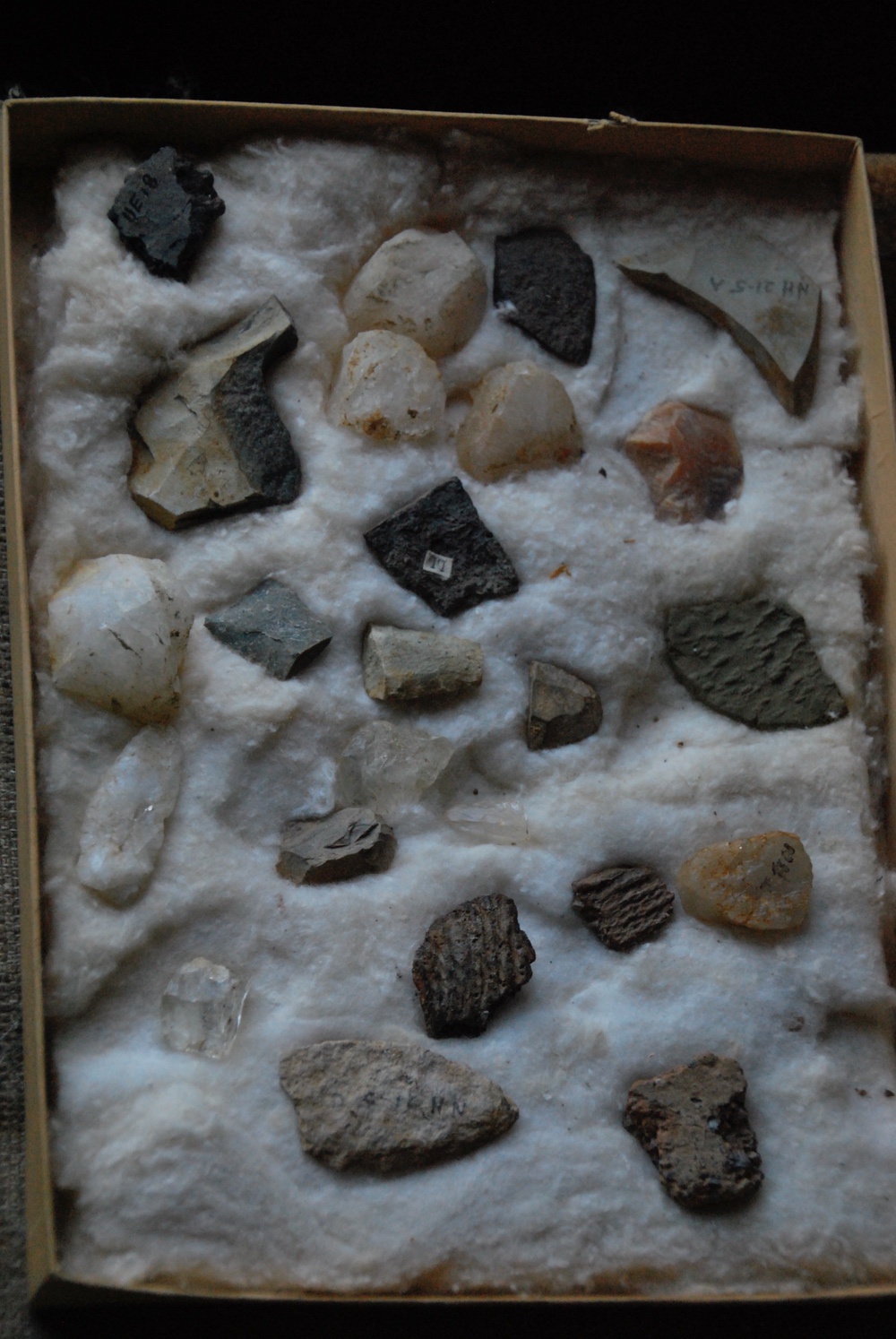
Last week I took a load off my truck and off my mind. I delivered all the late Helen Leadbeater’s Indian artifacts and journals to the Maine State Museum in Augusta. The boxes I had packed up last summer filled my Toyota Tacoma. They comprised the result of thirty years of collecting and documenting Indian artifacts from the upper Saco River Valley. I was afraid my truck wasn’t big enough to fit it all in. I was also afraid all that stone weighed so much I might break a spring, but I made it.


There to greet me were Arthur Speiss, senior archaeologist at the Maine Historic Preservation Commission, and Paula Work of the Museum. When I asked Paula what was so valuable about Helen’s collection, she said there had been hardly any professional archaeological work done in my part of Maine and, though Helen wasn’t a professional, she was a very careful researcher who kept extensive records of what she found and where.


Though my tenure here in western Maine overlapped Helen’s, we never met. My sister-in-law collected with her in North Fryeburg’s fields after they were plowed and harrowed in springtime. My brother viewed the collection after being granted access by Helen’s son, Arizona Zipper, who inherited her property across from Fryeburg Academy. When I wrote about Helen’s collection in this column, AZ, as Arizona Zipper likes to be called, knocked on my door and invited me to see it as well.


That was ten years ago when I was still teaching US History in Fryeburg. Virtually every archaeologist in the northeast had made the pilgrimage to Helen’s house, and one of them, Mike Gramly, asked me to inventory the collection for him. Gramly used to head up the Maine State Museum and the IRS recognizes him as an appraiser of archaeological collections like Helen’s. So, when I retired that became my first project. AZ gave me access again and I spent three weeks that first winter of retirement photographing her artifacts the way Gramly asked me to.


A local woman named Diana Bell heard about what I was doing and offered her assistance. While I photographed the artifacts box by box (Helen used hundreds of nylon stocking boxes to store them in), Diana scanned Helen’s notebooks and journals, which were also extensive. Thus I learned much about early human settlement of Fryeburg, Lovell, and Conway, New Hampshire. Helen published one scholarly article on pottery in the Maine Archaeological Society Journal in 1978.


A former student of mine named Bill Rombola had surveyed Helen’s collection during his archaeological study at the University of Southern Maine and published another article about in the journal in 1998. In it, Rombola reported that some of Helen’s artifacts were as much as 8000-9000 years old and were made from lithic (stone) material from New York, Vermont, Maine, Quebec and even northern Labrador (Ramah Chert).


AZ had little interest in his mother’s passion but he respected her work and wished to preserve it for study. His house is huge, difficult to heat and maintain, so for years he’s been considering a sale and a move to a smaller home. At one point, I was working with Dan Lee, former headmaster at Fryeburg Academy, to mediate a purchase of the home and turn part of it into a museum for Helen’t collection. AZ couldn’t pull the trigger on that so I began trying to convince him to let the Maine State Museum have the collection.


Last spring, he agreed under one condition: that photographs of Helen’s artifacts and digital copies of her journals be made available online as well as at the museum. I hurried to get his signature on a formal agreement to that effect from the museum and began to box up the collection. That occupied me last summer through some very hot, humid weeks getting it all packed and moved to a friend’s garage in Lovell. I also retrieved several boxes of artifacts that had been on loan to the Conway Library for exhibit.


Helen Leadbeater

In Augusta last week, Art and Paula helped me unload, and Paula showed me around the museum warehouse. I was thoroughly fascinated as only a history geek could be. On its moveable shelves were every historical collection about which I had been reading for decades! At one point we passed a drawer labeled “Michaud” which I knew to be a paleoindian site in Auburn, Maine. She pulled it out and let me hold a paleo projectile point over 12 thousand years old. It was quite a thrill. I said I wished I didn’t live so far away because I could spend months there totally enthralled. She said I’d be welcome anytime.


Wednesday, November 04, 2020

REMEMBERING NOVEMBER


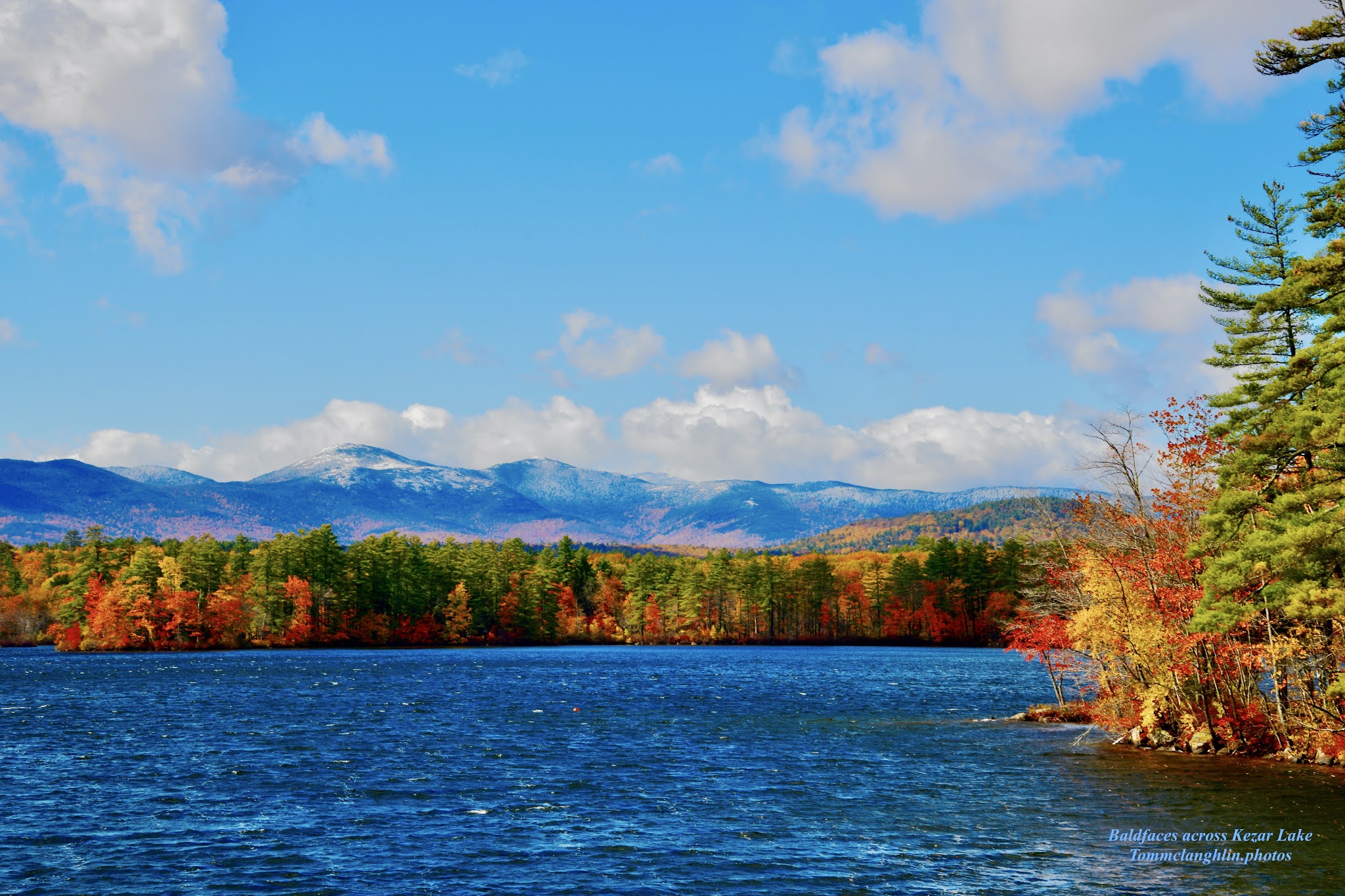
Lovell in October

There’s a familiar feeling I get in the fall when the air is cool and the wind is blowing. Fond memories are triggered from over forty-three years ago when I moved my young family to rural Lovell, Maine from Massachusetts. We got to our new old house in August, 1977 and by early October we were settled in. I had a few weeks in my new job behind me and took my shotgun into the woods after school to hunt partridge.

Western Maine in October

It was only a short walk to the overgrown farmland down the street that was promising habitat, but I only had about ninety minutes before the sun set and I would have to walk home for supper. No one freaked out to see a young man carry a shotgun down the road. In the Massachusetts I had left, some might have called police but that wouldn’t happen in Lovell. My formerly-rural town twenty-five miles outside of Boston had turned into a suburb while I was growing up. It changed and I didn’t belong there anymore. Rural Maine became my home and I’ve been here ever since.

My house in Tewksbury now


As a boy in then-rural Tewksbury, Massachusetts, I would accompany pheasant hunters in the woods near my house. I don’t remember their names; I met them while in the woods with my homemade slingshot and pockets full of smooth stones of appropriate size and shape. I was a hunter too. They knew that when noticing my armament and demeanor. Memories of one guy are still vivid. I saw him before he realized I was there. I was waiting to get a shot at a squirrel when I heard him in the dry leaves.


He asked me where I’d seen pheasants and I directed him to an area along a stone wall. I walked along behind him looking to right for squirrels and was startled by a shotgun blast I wasn’t expecting, but turned my head around to the left quickly enough to see an explosion of feathers. The shotgun fascinated me and I would have loved to have one of my own. My father wasn’t a gun owner and my mother, despite my begging, would not let me have a BB gun; hence my slingshot. Over and over, I practiced enough so I could hit what I was aiming at. After that, no squirrel was safe.


Lovell in November


November in Lovell, Maine was wonderful. By the time I got home from school — I was a teacher — there was very little time for deer hunting after Daylight Savings Time kicked in. I had to be out of the woods when the sun went down, but Saturdays and Veteran’s Day I was out there sunrise to sunset. Sundays, the family and I worked on the woodpile. When my brothers moved to Maine a few years later, we hunted together and that was nice. After a while though, I preferred going out by myself. 


I liked the solitude. Seldom did I see a deer but I explored a lot of territory. Leaves were down and, while walking for miles up and down hills, I could see a long way. After supper I would re-study USGS maps of the area and commit them to memory. Though I saw no houses or people where I went, I did see cellar holes. Those wooded hills had once been cleared of trees and covered by farms. Stone walls snaked up and down the hills. Crops grew and animals grazed. The walls were still there. Strands of rusty barbed wire seemed to grow out from the middle of tree trunks like dead branches, but the hills were all wooded again. Farm families who lived and died there were long gone.


Eventually, though, I stopped hunting. Maybe it was because my daughters refused to eat venison. They could always taste it, even in meatballs spiced and cooked in spaghetti sauce. Maybe it was because my testosterone declined with age. I don’t know, but I just lost interest. I still like to shoot in the woods, but now it’s with a camera. I still shoot squirrels which can cause a lot of damage to my property and the other properties I look after. In a way, I’ve come full circle. I can still hit things with a slingshot, but it’s a store-bought one now. I use it to dissuade Canada geese from coming ashore on the lakefront property I manage — and I prefer a .22 for squirrels.


Tuesday, May 05, 2020

Backcountry Resistance


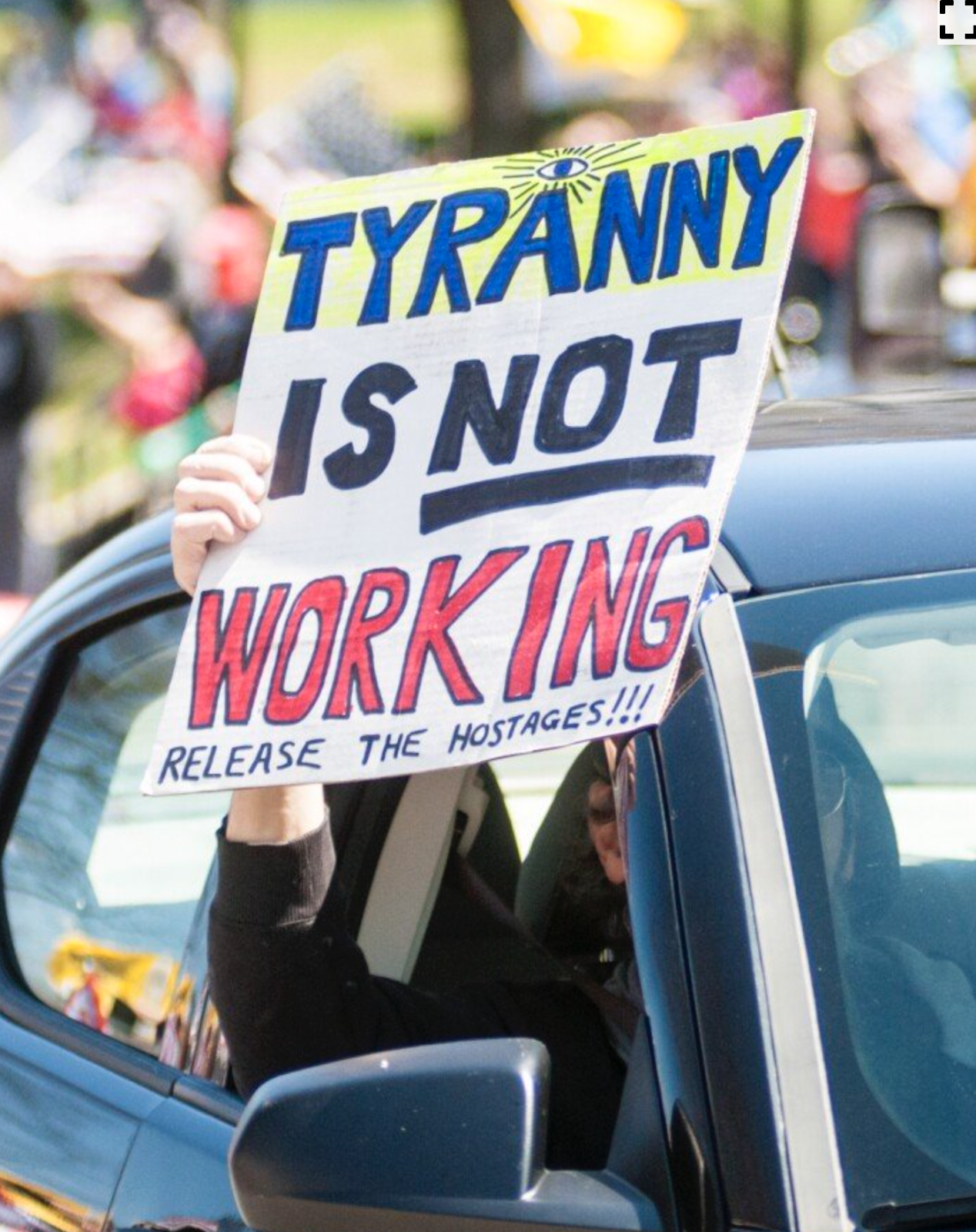
Good will toward government is diminishing in Oxford County, Maine. There has always been healthy skepticism toward centralized authority during the forty-three years I’ve been in residence, but it has grown over the last month of coronavirus shutdown. When Democrat Governor Janet Mills announced her decision last Tuesday to extend the shutdown across the state through most of summer, it took off.

Saturday Demonstration against Mills (from Portland Press Herald)

Shortly after moving here in 1977 as a leftist Democrat from Massachusetts, I was elected to Lovell’s three-man Board of Selectmen on the floor of town meeting. The other selectmen were descendants of our town’s original settlers and we met twice per week. By the end of year one my outlook started moving toward center. By the end of nine years I’d gone past center into right-wing territory. I’d become a strong believer in local control.

The land of Bernie bumper stickers

The rest of Maine and New England, however, was moving in the opposite direction and now all six states are run by left-wing adherents of centralized government control. In early weeks of the pandemic there was little dissent over lockdown and social distancing, but as people learned more about both the virus and about different approaches taken by other countries, many now see lockdowns as ineffective and unnecessary. They figure most of us are going to get it eventually and only the elderly with comorbidities need isolate themselves.


Now that President Trump has allowed governors to make their own decisions about quarantine, Democrat governors, including Maine’s, are exerting what locals see as arbitrary authority over their lives and livelihoods. Maine has not been hit hard and what effect there has been is limited to southern counties of York and Cumberland.  As of last week, Oxford County had no deaths and only fifteen confirmed cases of which twelve have recovered — yet Governor Mills ordered restaurants, hotels, campgrounds, and many other businesses to remain closed.

Saturday's anti-Mills demonstration (from Portland Press Herald)

Tourism is the mainstay of our economy here and local businesses depend on the summer season to get through the rest of the year, so Mills is going to kill off many local businesses permanently. The question now is: will they roll over and die or will they fight? Rick Savage, owner of Sunday River Brewing Company in Oxford County was the first to openly defy Governor Mills. Two days after her order, he went on national TV with Tucker Carlson who owns a place in nearby Andover, Maine and announced he would open on Friday.


Governor Mills pulled Savage’s health license and liquor license immediately and the Boston Globe reported that he shut down again. During a protest at the state house in Augusta Saturday, Savage was interviewed by Newscenter 6 saying he would stay open, pay the daily fines, and fight the order in court. He said other businesses planned to join him. Has Mills’ intimidated them into compliance or will they fight too? It should be an interesting week here in Oxford County.

Saturday's anti-Mills demonstration (from Portland Press Herald)
On Monday Republican leaders declared that Mills didn’t consult them about her shutdown plan. They’re asking majority Democrats to call legislators into special session and end her emergency powers but Democrats refused. Tuesday, Mills’ press secretary said she did communicate with Republicans through a computer portal. Although America’s initial virus response was bipartisan, it no longer is. Efforts to restart the economy have broken down along party lines in Maine and everywhere else.

Maine was supposed to celebrate its bicentennial this year but that’s not likely. It’s nice to be free of Massachusetts but Maine has since spawned its own oligarchy with Mills at the head. What I see in rural Maine seems another manifestation of similar conflicts during Maine’s early settlement. Lately I’ve been reading Liberty Men And Great Proprietors, a 1990 book by historian Alan Taylor. Revolutionary War veterans who settled in backcountry Maine hadn’t been paid for their service and believed they had a right to stake out claims and settle in wilderness areas away from the Province of Maine’s coast.


Maine then was part of Massachusetts whose government and courts were largely controlled by Great Proprietors like Henry Knox, Charles Vaughan, Josiah Little, and their ilk. They claimed ownership of vast land grants — some going back to colonial times. These proprietors wanted veterans and other settlers — the Liberty Men — to pay them for the land. Lawsuits continued for decades before the political influence of wealthy proprietors in the Massachusetts statehouse eventually won out. Rural resistance to state control thus has a long heritage here in backcountry Maine.

Wednesday, April 08, 2020

Cooperation Vs Coercion


Last week’s column described how Americans have largely cooperated with government-imposed shutdowns so far. Now I’m wondering how long they’ll continue doing so. I’m concerned about that for several reasons, the biggest of which is: how soon can federal relief money get into the hands of people who are living on the edge? Many if not most Americans live paycheck to paycheck and they have to eat.


While those checks comprise a big part of the trillions headed for needy Americans newly out of work, there are snags. Small businesses are promised loans enabling them to keep paying employees through the crisis so they won’t have to be laid off. The loans, if guidelines are followed, will not have to be paid back. But — and it’s a big but — what are the guidelines? Banks are leery because they remember being subsequently investigated for not vetting loan applicants closely enough during the TARP crisis in 2008/2009.


Locally, Norway Savings Bank has emailed its account holders about its participation in the PPP (Paycheck Protection Program) which is funneling the $349 billion authorized as part of the $2 trillion overall COVID-19 relief package. Small businesses can apply as of April 3rd and self-employed people may apply beginning April 10th. That’s good news, and came faster than I feared it might.


Monday I spoke to a small businessman running a retail business in western Maine with about a half-dozen employees. He has so far avoided furloughing anybody but cannot hold out indefinitely, so he called Norway Savings Bank and is waiting to hear back. The bank official he spoke to, with whom it seemed he was personally acquainted, indicated he was swamped with requests. That’s no shock, but how long will it take to process applications? How soon before money is in the hands of the newly unemployed?


Several times over the past few years I’ve written of America’s widening political divide, and it’s a frequent topic on my “Left & Right” community TV show — and that was all before the Corona Crisis. For the most part, those on both sides of the divide have cooperated, but there’s growing tension in spite of our shared danger. It’s in evidence during the daily COVID-19 press conferences which are frequently interrupted by snarky questions from left-wing reporters and angry answers from President Trump.


Though I’m not a golfer, I was miffed when Maine Governor Janet Mills closed golf courses. What’s the point? Golfers can easily maintain social distancing while playing and skip socializing in the clubhouse after. How is that any different from people going out for walks in the neighborhood? What is accomplished by the ban other than pissing off golfers? Tuesday I read in the Portland Press Herald that: “The City of Portland is closing two parking lots adjacent to the popular Back Cove Trail Tuesday to cut down on the number of people using the 3.6-mile path around the cove amid the coronavirus outbreak.”


The same day I read a legal notice in the Conway Daily Sun for arriving summer people in my town of Lovell. Lovell selectmen are telling those people they must: “…immediately self-quarantine for 14 days unless when engaging in Essential Services as defined in Executive Order 19 FY 19/20.”


Okay. I don’t like the tone, but it’s consistent with what most states are requiring of out-of-state visitors and property owners. But then the notice states: “A violation of this order may be charged as a Class E misdemeanor subject to a penalty of up to six months in jail and a $1000 fine.” Thus the tone gets even more authoritarian, but it doesn’t stop there.


It continues with: “This order may be enforced by local government officials pursuant to their authority to regulate the operation or occupancy of buildings.” So, their authority to regulate how structures are built through Planning Boards and Code Enforcement Officers is now extended to enforcing when and how out-of-state property owners may leave their buildings? It goes on still fiurther:”The Selectmen will be monitoring visitors coming into the Town of Lovell and enforcing this Executive Order to protect public health and safety,” 


There’s no police force in Lovell. Will the selectmen be asking the county sheriff, the state police, or town constables to arrest violators? What about people who grocery shop in North Conway, NH? That’s out of state. Must they quarantine themselves after putting their groceries away. Instead of threatening to arrest people, how about just asking them to cooperate? That’s what has worked across the nation up to now.


Which brings me to another point. Am I the only one worried about the increasing power of government to encroach on our basic civil liberties in the name of public health? How easily will they relinquish power when the virus goes away?