Showing posts with label war. Show all posts

Tuesday, April 30, 2019

Second Coming


There are thousands of poets out there, maybe millions, but very few make any sense to me. It’s possible I’m not sensitive enough, or I’m not bright enough to understand what they’re trying to say. It’s also possible they’re trying too hard, or they’re too artsy and flamboyant. Robert Frost makes sense, but then he wrote of life in rural northern New England where I live. I understand him. Shel Silverstein makes sense. So does Emily Dickenson.
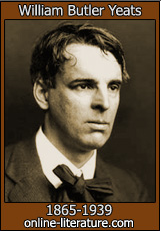

Among Irish poets, the only one I get is William Butler Yeats, and I happened to be in Sligo last month where he wanted his remains buried after he died back in the thirties. He was born in Dublin, raised there, and in England on and off, but his heart was in Sligo where he spent summers. His early poems were esoteric and seemed overly stylish, but his later stuff was much more resonant to my ear, especially The Second Coming. I knew of it from encountering so many of its lines quoted by other writers of both fiction and non-fiction — before I ever knew the words belonged to Yeats.

Sligo last month
I don’t know where or when I heard it initially, but the line that struck me first was:
The best lack all conviction, while the worst
Are full of passionate intensity.


Who are the best these days? Who are the worst? Well, the best, I think, would be those who take a long view of the human condition. They know something of history — what has worked and what has failed over the centuries, over millennia even. They don’t know all of history; nobody does, but they perceive an outline of how we humans have behaved in times of plenty and in times of want. They understand what governmental systems have been applied and what resulted. Others who see only what’s in front of them — who know only what has occurred during the last few years of their own lifetime. They are the ones full of passionate intensity today, a century after Yeats studied their counterparts.

Sligo last month
Do the best lack conviction? Maybe, or perhaps they have tried long to reason with the passionately and intensely ignorant with little result. Maybe they’ve given up trying to persuade and are saving their energy for when, as Yeats puts it:
Things fall apart; the centre cannot hold;
Mere anarchy is loosed upon the world.


Yeats was born to English privilege. His ancestors were part of Ireland’s protestant ascendancy. He was classically educated but his loyalties were divided between his British colonial ancestors and the Celtic Irish among whom he lived, and to whom he related most. Ultimately, he sided with them against Ireland’s British overlords. He was an active participant in Irish Literary revival but stayed on the sidelines during the 1916 Easter Rebellion and ensuing struggle. He sympathized with the cause, but not with the violence used to gain independence.


Mostly agnostic, Yeats disdained Roman Catholicism but related to ancient Irish mysticism. While most Irish of his time were comfortable with a blend of the two, Yeats was not. He related much more to pre-Christian Gaelic culture and that influenced his poetry. The Great War had just ended when he published The Second Coming in 1919, exactly 100 years ago. The 1916 Rebellion was followed by the Irish Civil War waged until 1922 with the Russian Revolution in the middle of all that as well. Things were indeed falling apart in Yeats’ world.


The great love of Yeats’ life, the actress Maude Gonne, was caught up in both Catholicism and violent rebellion against the British. Yeats proposed to her four times and was rejected four times. She instead married Irish Revolutionary John McBride who was executed by the British after she divorced him, but Yeats carried a torch forever after. He had love affairs and a marriage that produced children, but his personal life was as confused as his theology.


The Second Coming is apocalyptic but vague. He evokes Christian imagery but blends it with ominous images of The Sphinx. Rather than a triumphant return of Jesus Christ, Yeats sees something menacing:

The Second Coming! Hardly are those words out
When a vast image out of Spiritus Mundi
Troubles my sight: a waste of desert sand;
A shape with Lion body and the head of a man…

…And what rough beast, its hour come round at last,
Slouches towards Bethlehem to be born?


Both Christians and secularists today point to signs of an approaching apocalypse, but Yeats had much more reason to suspect it: World War I, violent rebellions in Ireland and Russia, the Spanish Flu killing tens of millions — all that was happening as he wrote The Second Coming. 2019 seems placid compared to 1919.

Tuesday, March 14, 2017

Just Trying To Keep Up

In regard to my understanding of the world — what is going on and why — the best I can do is maintain a “working hypothesis.” The “what” is easier. The “why” to explain the “what” is more daunting because as new information emerges, I have to modify.
My biggest challenge is understanding developments in what we broadly call the Middle East. When I taught 20th century US History and current events, I’d start the school year with the essential question: “Why do radical Muslims want to kill us?” Teachers back then were required to formulate “essential questions,” then plan lessons around them. We were at war and some former students were fighting it. Others would be. I wanted them to know what they were fighting.
That involved lessons going back almost four millennia to Abraham’s time, then relating those lessons to current events. I had to teach about Judaism, Christianity, and Islam. There was so much information to take in that, without some kind of mental framework within which to arrange that information, it wouldn’t stick. So, I drilled them on regional geography as today’s national borders are drawn. I wanted them to be able to call up a Middle East map in their mind’s eye and know where Iraq was, Iran was, Syria was, Israel was, and so on. As they absorbed both historical and current events, they could mentally pin each onto their mental maps in its appropriate place. Babylon was in today’s Iraq and Persia is today’s Iran, and so on. Borders between land and sea were static, but national borders changed constantly.
Religion is only one dynamic. In my early teaching years, most students came with a basic understanding of Christianity. At the end, only a minority did and I’d have to start from scratch. I’d compare and contrast beliefs of Judaism, Christianity, and Islam, then historical conflicts between them going back to 600 AD with the establishment of Islam. I’d explain that radical Muslims take Muhammed’s writings literally, especially those in the Medina Koran, which advocated converting Jews, Christians, and others at the point of a sword. Muhammed’s earlier writings in what is often called the Mecca Koran offered a reasoned approach. When some call Islam a “religion of peace,” they’re referring to the Mecca Koran.
ISIS, al Qaida, Hamas, and the Muslim Brotherhood follow teachings from the Medina Koran. Judging from his actions, so, also, did Muhammed himself. Radical Muslims today more closely follow what Muhammed actually did when he conquered the Arabian Peninsula and imposed Islam. It’s also what his followers did for the next thirteen centuries. Only after the last caliphate — the Ottoman Empire — was defeated in World War I did forced conversion end, and then only temporarily. What remained of the Empire became modern Turkey and nation-states created by the winners: France and Great Britain. Turkish leader Kemal Ataturk abolished the caliphate, separating church and state. Violent Islamic expansionism went into remission, one could say, from about 1920 to about the 1970s or so — a half century. Now ISIS calls itself the new caliphate — which carries the mantle of Islamic leadership — and Muslims from around the world are flocking to it.
Then there’s conflict between the two main branches of Islam: Sunni and Shia which have been fighting each other for centuries, not unlike the way Christian Catholics and Protestants in Europe did. Four out of five Muslims are Sunni while Islam edges Christianity as the world’s largest religion. Both sides support radical groups. Iran is the largest Shiite country with its Revolutionary Guard, its proxy armies Hezbollah and the Houthis, and sometimes Hamas. Sunni radicals include ISIS, al Qaida, Boko Haram, Al Shebaab, sometimes Hamas, and others.
Boko Haram

Then come the economics of the region — especially oil. Whatever was going on before oil was discovered in vast quantities, that all changed as petrodollars flooded the region and powered an Islamic resurgence.
Another dynamic is the reestablishment of Israel as a Jewish nation-state in 1948. It’s right in the middle of what had been almost exclusively the Muslim World for centuries. Many Muslims, Iran especially, pledge to wipe it off the map.
And there are ethnic conflicts within Islam. Sunni Kurds, for example, are a minority in the border areas of Iran, Iraq, Syria, and Turkey — all of which, along with Russia now, are fighting ISIS, the Islamic State of Iraq and Syria. Kurds want to be a nation-state too, but none of the aforementioned countries will cede them their ancestral territory which overlaps all. The US is arming Kurds. Last week, President Trump put US Marines on the ground in Syria. US soldiers must now fight alongside all these groups — some of which are still fighting each other — against ISIS. What could possibly go wrong? Last week I also learned that erstwhile National Security Advisor Michael Flynn was being paid by Turkey while he advised President Trump.
Looks like I'll have to modify that hypothesis again pretty soon.

Tuesday, July 05, 2016

Options For Peace

Fort Gorges with Portland Head Light on right

Remnant defensive fortifications are evident all over the approaches to Portland Harbor in Maine. Those from the 19th century like Fort Gorges, Fort Preble, and Fort Scammell are mostly granite. Others from the 20th century are concrete. All were constructed after the British bombarded Portland in 1775. That they’ve never been used should not be seen as a waste of the money spent building them. They accomplished their purpose just by being there because, as Plato observed twenty-five centuries ago, the best way to preserve peace is prepare for war. Would Portland have been attacked again if the defenses were not there? Probably, though no one can say for sure.
Fort Scammell from Willard Beach

While my father and his brothers fought in WWII, I don’t know of any other McLaughlin ancestors in combat. I’m sure there were going way back in Ireland, but I don’t know specifics. Ever since finding out my surname, McLaughlin, translated from Gaelic, means “of the Vikings,” I’ve been consuming information about those notorious raiders. For a thousand years, they were known exclusively as savage warriors, plunderers and rapists until relatively recent historical revisionist efforts to soften their image — probably because so many prominent people in western Europe had, like me, discovered they had a few Viking ancestors. Their savage reputation doesn’t bother me though, especially after learning of notorious exploits by McLaughlins in modern times, like those of the McLaughlin Brothers Gang in Charlestown who were rivals to Whitey Bulger’s Winter Hill Gang.
Edward "Punchy" McLaughlin mug shot

The Vikings” series on the History Channel eschews such revisionism, showing Ragnar Lothbrok and company in their ferocious glory. It’s very popular, having recently been renewed for its fifth season. Bernard Cornwell’s eight-book series “The Saxon Tales” is also quite popular and covers much of the same Viking history The History Channel does. The BBC has recently dramatized “The Last Kingdom” which is book one by Cornwell, who bases much of it on one of the few written accounts of that period: “The Anglo-Saxon Chronicle,” which was begun by King Alfred in the 9th century. I’m grateful to Cornwell for fashioning historical novels out of them, thereby making it more enjoyable to learn about that time and I’ll trust his judgement about how best to characterize the Vikings. Viking religion sanctioned their savagery, not unlike the way Islam encourages similar depredations by the likes of ISIS today.
By all accounts, the 9th century was a brutal time in the British Isles as Ireland suffered the same ravages as the Anglo-Saxons, and Britons, and the Scots. There were other invasions prior to those by Vikings, but I’ve not studied them. During our two-week tour of Greece a couple of years ago, I learned that my wife’s ancestors endured many battles with invaders too numerous to count. All my first-hand and second-hand studies of the histories of every time and place indicates that the world hasn’t changed in the last few millennia — and won’t likely improve in the foreseeable future.
It’s the same lesson boys in my neighborhood learned early: being ready to fight at all times will reduce the number of occasions when you’ll actually have to. My wife often points out that it’s the male of the species who stirs the misery of war throughout human history, and I cannot dispute that. It would certainly be better if we could find more peaceful ways to settle disputes, and occasionally we can work things out by negotiation. The recent vote by British citizens for independence from the European Union will likely accomplish a non-violent exit, for example. When we notified the British on the Fourth of July, 1776 that we wanted independence, however, a war was necessary before we could successfully negotiate the Treaty of Paris and actually get it. When the American south wanted independence in 1861, an even more brutal war ensued.
Fort Preble with Fort Gorges behind, Spring Point Light right
from Willard Beach in South Portland

After Pearl Harbor was attacked, we demanded unconditional surrender of both the Japanese and their German allies before we would agree to stop killing them. Only then did we obtain a lasting peace. Is it possible to negotiate with enemies like al Qaida and ISIS who are killing Americans today? Clearly not. The only way to bring that to an end is to thoroughly destroy them and all other radical Muslims, the sooner the better. That’s what Thomas Jefferson did two centuries ago. He sent the Marines to Tripoli to kill Muslim pirates rather than pay tribute the way his predecessor, John Adams did. There’s no other way. I wish there were, but there simply isn’t.
Destroying Muslim Pirates

As I tell my wife, men today may wish they never have to tap their innate capacity for combat, but that’s not possible when other men threaten their families, their freedom, and their way of life. And on it goes.

Monday, March 23, 2015

Don't Fight Without It

President Truman was right to demand unconditional surrender from Japan. After we destroyed their navy and were bombing them daily, they sought negotiations. Truman refused, and warned them he had a fearsome new weapon he would use against them if they didn’t surrender unconditionally. Teaching US History again to a group of ten high-school aged home schoolers, I’m showing them “Hiroshima.” It’s a wonderfully produced historical film depicting events, both in Japan and in the United States from FDR’s death in April, 1945 to the use of atomic bombs on Hiroshima and Nagasaki in August.

Unconditional surrender is what the United States should demand whenever we go to war with anyone. Soldiers we send to fight and die deserve nothing less. We do them a disservice if we send them without a clear sense that it’s absolutely right to declare war, and with the commitment to see that war through to a victorious end. Otherwise, we shouldn’t go to war at all.

We shouldn’t fight without a declaration by congress either. The last time that happened was 1941, the day after Pearl Harbor. We’ve fought in dozens of places and circumstances since - large and small, short and long - and how has it worked out? Korea is still divided; North Korea is still hostile, threatening the US with nuclear weapons they developed while we were “negotiating” with them. Vietnam is reunited, but under communist rule. That development went against the Truman Doctrine of containing communism rather than defeating it outright as General George Patton wanted to do after the Nazis surrendered in May, 1945. President Obama claimed to end the war in Iraq, but did he? Looks like it’s still raging, and we’re going back in.
We went into Afghanistan after the September 11th attacks to get Osama Bin Laden, who planned the attacks from there. Americans supported that effort wholeheartedly, but Bin Laden escaped across the border into Pakistan. President Bush decided not to pursue him there. Big mistake. Bush should have said to Pakistan: “Give him over or we’re coming in after him,” but he didn’t.
Instead, we continued the “war” in Afghanistan that was really nation-building. Could we realistically expect to build a democratic nation in a region ruled for millennia by tribal warlords? Could we expect to even hold Afghanistan after the British experience there? The Russian experience? Another big mistake. We were after Bin Laden and we took our eye off the ball. War is war. It’s what we do when negotiations fail. It’s brutal. People get killed and things get wrecked. Often, it’s innocent civilians who are killed. War is hell, as General Sherman observed and that’s no less true today than it was when he said it. That’s why we shouldn’t conduct it unless congress declares it. When we do go to war, we should go all-out until it’s over — and it’s only over when the other side gives up unconditionally. Absent that, it’s just going to flare up again like a smoldering ember.
We’re not capable of nation-building anywhere else but right here. Only the people who live in a place are capable of creating a nation there. That’s how ours was built. Have we forgotten that? I think we have. We should have searched out al Qaida and destroyed it — wherever it went to hide. If things got wrecked and people were killed? Well, that’s war. Don’t start if it you’re not willing to finish it. It’s not our obligation to clean up afterward either. It’s the job of the people who live there. They’ll be more careful of who they let in next time.
Teaching again, I’m reminded of how idealistic young people are. As we study each of America’s wars, I say: “Now that you understand what caused the war, how it was fought, and how it turned out, imagine you were an 18-year-old male when it started. Would you volunteer to fight?” The only way to decide is to ask themselves if they were willing to risk their lives in pursuit of whatever the goal was. If it was ill-defined, the answer was usually no. Defining the goal is the job of our elder statesmen and women. If they can’t do it in simple terms, it’s not worth dying for.
Surviving relatives should be able to say something more than “He was killed in WWII.” Rather, they can say: “He died to defeat Nazism.” Veterans can say: “I lost my leg fighting the Japanese who attacked us.” What can the last soldier maimed by an IED just before the scheduled Obama pullout from Afghanistan say? Our soldiers shouldn’t have to think more than a second about why they’re fighting, but today our president refuses to even mention our enemy by name.
Harry S. Truman was an ordinary American thrust by circumstances into a position where he had to make a momentous decision in only a few weeks: whether to use an awesome new weapon on our declared enemy — and thereby bring the most destructive war in history to an end, decisively, with no smoldering embers. Truman said he never lost a minute’s sleep after making it, and today, Japan is one of our closest allies.

Tuesday, May 27, 2014

The Community Organizer Commander


Soldiers and veterans interest me because I’ve never been one, and because many are regular readers of this column. When they allow it, I like to pick their brains. They’ve had experiences I’ve never had and never will have. I almost joined up after high school, but didn’t, and I’ve often regretted that. Even if they haven’t been in combat, soldiers have worked and lived closely with others who have, and it changed them in some fundamental way. My sense is that for most the change has been a net positive —especially for Marines and soldiers with elite training such as Special Forces and Seals. I’m curious how they feel about changes taking place in the government of the country they’ve offered their lives to defend. They are, or have been, instruments of that government, yet many I’ve talked to lately express profound dissatisfaction with it even before the VA scandal broke.

Washington has deep misgivings about veterans too. In 2012 the Department of Homeland Security under Janet Napolitano profiled what sort of people are potential terrorists and the list included Iraq veterans. Also mentioned were “extreme right-wing” organizations, people who “believe that one’s personal and/or national ‘way of life’ is under attack,” or people who are “suspicious of centralized federal authority” and “reverent of individual liberty.” People of Janet Napolitano’s ilk consider the Tea Party an “extreme right-wing organization,” consequently this writer and many readers fit the profile. So do virtually all conservative Republicans and Libertarians. 
Surviving veterans, many of whom offered their lives in service to these individual liberties, are indeed suspicious of an increasingly centralized federal authority so disdainful of them as to consider them potential terrorists. The irony here is that 95% of terrorists worldwide are Muslims, and over the last thirteen years thousands of American soldiers have died and more than a hundred thousand others have been wounded while fighting them. Yet, while the Obama Administration forbids profiling Muslim terrorists as terrorists, it has no problem profiling American veterans of the Iraq War as potential terrorists.
Now consider that the VA gives “top notch medical treatment” to Muslim terrorists imprisoned at Gitmo — far better than it provides to our veterans. According to information a Pentagon insider provided to Judicial Watch:

There are approximately 150 terrorists at Gitmo yet the VA has 100 doctors, nurses and healthcare personnel assigned to them, [retired Navy Commander J. D.] Gordon says. ‘Doctors and medical personnel are at their beck and call,’ he confirms, adding that they are readily available for things as minor as a cold, fever, toothache or chest and back pain. The jihadists who murdered thousands of Americans never have to wait, Gordon says, because the Gitmo patient to healthcare provider ratio is 1.5 to 1. ‘No problem, come right on in,’ Gordon writes in his piece. If you risked your life serving your country, however, the ratio is 35 to 1.


As Michelle Malkin points out that America’s illegal aliens get much better health care than our veterans too:

In New York, doctors report that nearly 40 percent of their patients receiving kidney dialysis are illegal aliens. A survey of nephrologists in 44 states revealed that 65 percent of them treat illegal aliens with kidney disease. In Memphis, a VA whistle-blower reported that his hospital was using contaminated kidney-dialysis machines to treat America’s warriors. The same hospital previously had been investigated for chronic overcrowding at its emergency room, leading to six-hour waits or longer… In Arizona, illegal aliens incurred health-care costs totaling an estimated $700 million in 2009. [Meanwhile’] in Phoenix, at least 40 veterans died waiting for VA hospitals and clinics to treat them, while government officials created secret waiting lists to cook the books and deceive the public about deadly treatment delays.

We’re hearing lots of excuses from Washington about the VA scandal. In spite of the fact that Obama made at least seven speeches in the last seven years promising he would not rest until he had fixed the waiting times at VA, and emphasizing how absolutely outraged he was about it, White House advisor Dan Ffeiffer had the gall to say last week that the president only recently heard about the problem on the news.

This is our commander-in-chief, the man in whom our soldiers must have confidence when he sends them into battle. As the House Select Committee on Benghazi unravels what really happened on September 11, 2012, Americans will learn what President Obama was doing as his aids watched Muslim terrorists attack the compound there. What exactly was the commander-in-chief's response when brave American soldiers, vastly outnumbered and outgunned, fought desperately for so many hours and ultimately died as they awaited reinforcements that never came?

Tuesday, April 01, 2014

Objective Truth

“What do you know for sure?” the old man would always ask me after letting me in and giving me a cup of coffee.

“Not much,” I’d answer.

“Neither do I.”

I was a twenty-year-old field supervisor for a private security company and Ernie was a guard. We worked the third shift and had many late night conversations. Ernie was in his sixties and spoke with a Tennessee drawl. He had been raised down south but left home early and wandered around early 20th century America. He always carving something between rounds and he’d push out little chips of pine while telling me stories. He’d worked with stone for a while helping Gutzon Borglum carve Mount Rushmore but pine was easier, he said. He went to Europe afterward and fought in the Spanish Civil War. Not knowing much then about what that war was about, I didn’t even think to ask what side he took, but I suspect now he fought with the Republicans. That was the side of anarchists, socialists, and communists.

Ernie was a young man then. As Winston Churchill is reputed to have said: “If you're not a liberal at twenty you have no heart. If you're not a conservative at forty, you have no brain.” That old man had a brain when I knew him.

During WWII he served as a crew member on an American bomber that was shot down over the North Sea. Rescued by Germans, he was a POW until the end of the war. Ernie was ethnic German and spoke the language and his captors treated him fairly well, but they did a lot of tests on him because they wanted to learn how he survived in frigid water longer than their own airmen were able to. Later, he took home a German war bride.
At the time, I was moving leftward in my own politics while Nixon was finishing his first term. Ernie was patient with me and listened to my utopian ideas about how the how the world should be run. He would ask questions, which now I realize were efforts to help me examine my ideas more deeply. He’d say sometimes that the more he learned, the less he knew and that’s why he asked so many questions. His was an interesting history and it left him with at least two things I found attractive: a sense of humor, and humility.
Of all the history I’ve learned, there’s not a lot I can be sure of because it’s written by human beings. Primary sources like Ernie are best, but imperfect. Things we see with our own eyes can be subjectively interpreted based on our preconceived ideas about how the world works. While I do believe objective truth exists, we humans never perceive it flawlessly. We should strive to, but be constantly aware that we always fall short.

Still, it’s helpful to read as many imperfect history books as we can. Biography is good because it’s one human writing about another, which produces a more objective account than autobiography. Others see our qualities and faults more realistically than we do.
Last week President Obama met with Pope Francis in Rome. I’m not sure who else was in the room while they talked, but at least two vastly different versions emerged about what they discussed. The Vatican issued a statement saying they focused “on questions of particular relevance for the [Catholic] Church in [the United States] such as the exercise of the rights to religious freedom, life, and conscientious objection,” a clear reference to the schism between the US Catholics and the Obamacare mandate that employers provide abortion-inducing drugs and contraception. A lawsuit against the Obama Administration being argued before the US Supreme Court as the two men met.

When asked at a press conference after their meeting, however, President Obama said: “We didn’t actually talk a whole lot about social schisms in my conversations with His Holiness,” and Francis “actually did not touch in detail” on the mandate.

Interpretations of historical events by third parties are even more subjective. One of those accounts has much more credibility to me than the other, for example. Let’s just say I tend to agree with the Tweeter who described it as a meeting between “the pope and the dope.”

How will history record their meeting? Several historians will write it up, and each account will vary according to the individual historian’s imperfect understanding of how the world works.

What is the truth about what happened in that room? Only God knows for sure.

Wednesday, May 01, 2013

Talk Is Cheap

Things ordinary people learn growing up in the neighborhood help to understand international relations. It’s obvious now that President Obama was bluffing when he warned Syria not to use chemical weapons, and the world knows it too. Syria called his bluff - crossed his red line. As the late Margaret Thatcher would put it - the president is going wobbly - and in doing so, making the world more dangerous. It would have been better if he’d kept his mouth shut, but talking is all he knows how to do.


Growing up we learned the toughest people didn’t talk much, whereas those who talked a lot tended to be the ones who wimped out at crunch time. Talkers lacked inner strength and were afraid others would detect that, so they chattered on about how tough they were. These are basic lessons men learn about other men. Those who come to power apply them.
Can you remember a president who talks as much as Obama does? When the only tool you have is a hammer, every problem is a nail. Early in his presidency, Obama want on an apology tour of Europe and the Middle East making speeches about how he was different from other presidents. His foreign policy was to show Muslims how nice he was, that he wasn’t like those other guys. Then he really expected Muslim leaders would all want to make nice. It hasn’t worked out that way of course, and now our president doesn’t know what to do next. He has no other tools in his toolbox.

When a bully goes into a bar, he’s not going to pick on the toughest-looking guy in the place. But if he suspects the toughest-looking guy is really a wuss, the bully will definitely poke at him to see what reaction he gets. When he discovers the guy has a jelly spine he’ll pile on the humiliation. Just so, when the bullies and crazies of the world think superpower America has a wimp in command, they’ll keep pushing to see what they can get away with. It’s their nature. North Korea is doing it. Iran is doing it. The radicals in Benghazi were doing it. Now Syria is doing it.

It’s not going to stop.
A connection ties Benghazi, Syria and Iran and Obama together. First, Obama denied the Benghazi attack was terrorism, made up a story about it being caused by a mysterious movie few ever heard of, and ordered his officials to push the lie. His Mainstream Media lapdogs went with it and refused to look into it any further. Other sources offer explanations for what Ambassador Stevens was really doing in Benghazi: running weapons from radical Muslim rebels there to other radical Muslim rebels in Syria via Turkey. We know Iran has boots on the ground in Syria to support fellow dictator Bashir Assad and they knew what Ambassador Stevens was doing.
Now back to Obama’s bluffing: The day after the Benghazi attack Obama said: “And make no mistake, we will work with the Libyan government to bring to justice the killers who attacked our people.” On October 26th, he said: “[M]y biggest priority now is bringing those folks to justice and I think the American people have seen that’s a commitment I'll always keep.”
Umm, no, Mr. President, we haven’t seen that. It’s been seven months and nobody has been arrested or captured or “brought to justice” as you keep promising. All we’ve seen are lies, cover-ups, and evasions by you and others in your administration.
Regarding Iran’s efforts to build nuclear weapons he told the world: “Make no mistake . . .” the US will “do what we must” to prevent it, and “all options are on the table.” But was Iran dissuaded? Obviously not. They continue on their merry way with assistance from North Korea, China, and Russia - none of whom take Obama seriously either.

He’s commander-in-chief of the strongest military the world has ever seen, but he has little idea how to use it. It’s as if Obama is the remote control device for an awesome military machine but he has no batteries inside him - no courage - and now the world knows it.

And don’t tell me about how “brave” Obama was to authorize the hit on Osama Bin Laden. The SEALS who carried out the mission were the brave ones. Insider accounts describe the president as indecisive and dithering until then-Secretary of Defense Leon Panetta took control of the situation because the Obama and his closest confidant,Valerie Jarrett, kept postponing the decision.

And the “tough” drone strikes? To community organizer president, watching intelligence videos of al Qaeda leaders hiding in Pakistan or Yemen and then shooting them with Hellfire Missiles is like playing video games with the "Choom Gang" back in Hawaii.

The worst thing is, truly brave American soldiers under his command know all this too. Why can’t the president tell us what really happened in Benghazi? “The FBI is investigating,” he says. Of course, the FBI investigated Major Hasan the Fort Hood shooter and the Boston Marathon bombers too and cleared them both. Will Obama do something about Syrians using chemical weapons? Nope. Monday he told us he wants more investigation. As the LA Times put it: “Obama’s Red Line on Syria Grows Softer.”