Showing posts with label Ireland. Show all posts

Thursday, December 24, 2020

MY MOTHER

We buried her Tuesday.

Mary Haggerty with two of her brothers 1925

She was called Mary. So was her mother. It was a common name for girls a hundred years ago when people venerated the Holy Family and named their children accordingly. Mary Elizabeth Haggerty, was born the youngest of four in September, 1924 with three older brothers, one named Joseph. They were protective of her. That’s what boys did in those days. They’ve all passed on and now so has Mary. Few have ever touched as many people as meaningfully, as profoundly, as she did over her ninety-six-year lifetime.

Mary Haggerty 1942


She became Mary McLaughlin in 1942. Her boyfriend, Mac, came back to Boston briefly on leave from the US Navy. She said later that she didn’t really want to elope with him but he was persistent and she gave in. Mac recognized what a gem Mary Haggerty was and he didn’t want to lose her. She was exceedingly pretty and he knew other men would do their best to win her.


Mac


 Elopements like Mary’s were common during World War II, and Mac sailed off a day later. As Mrs. McLaughlin, she moved several times to various port cities on the east and west coasts —wherever Mac’s ship was sent. She’d find a secretarial job and a room. When his ship was deployed to England she waited for him. After D-Day when his ship was deployed to the Pacific, she waited for him in San Francisco. She had her first child in 1946 and seven more after that until 1963. It was the baby boom.


Mary McLaughlin with her first child 1946


 Mary had been a single girl for eighteen years. She was a wife for thirty-five years before Mac died in 1977. She was a widow for forty-three years. She was a mother, grandmother, and great-grandmother for fifty-four years. Her eight children called her Ma. Her twenty-nine grandchildren called her Ma and so did all their spouses. Her forty-two great-grandchildren called her Ma, and eventually that’s how she thought of herself: as Ma.


Mary with some of her family 2014


 As matriarch for an extended family of more than eighty people, she endeavored to pass along the faith she had inherited, and did so by embodying it. Shortly after being widowed, she used Mac's life insurance to buy an old farmhouse in Lovell and fix it up. She recalled many happy summer days in the country with her own grandmother and wanted the same for her grandchildren. For thirty-two years, she provided those memories before finally going into assisted living five years ago at ninety-one.


In assisted living 2016


In the year 2000, Ma invited her children to accompany her on a trip to the Holy Land. All were deeply affected by the experience of walking the paths Jesus Himself walked two thousand years before. Whenever they heard gospel readings after that, they could remember being in each of the places where His preaching and His miracles actually took place.


With five of her children 2014


As Ma went into hospice at ninety-six, her extended family opened a forum on Whats App where her many offspring posted remembrances of what she left them: her love and her faith in God, both of which she lived out seamlessly. One said:


“Ma we owe everything we have to you, the way we conduct ourselves, treat other human beings and our belief in god is all owed to you. Through your pure kindness, hard work and patience you’ve made us all good human beings who will teach our kids and grandkids forever after you meet God.”


With a few family members


 Another said:


“It’s amazing to reflect on all you have taught me and our family about love. You taught us all with your whole life — by the way you lived, by the conversations you had, and in all of your relationships with us. You taught us in big and small ways. These have impacted my life in important ways at various times. I know they will continue to do so long after today.”


Mary Haggerty in the middle around 1930


 Another said:

“When we would visit, I remember Ma would let us kids into her bed early in the morning. With her eyes closed we would say prayers, then she would tell us stories. They always started with a blueberry patch. When my children wanted to read the same book for the thirty-fifth time, I closed my eyes and started into the same blueberry patch stories. Love you Ma.”


Ma's 90th 2014


 Another said:

“As a kid when I asked you why you moved to Maine, you spoke of making memories for your grandchildren similar to your own childhood — of a grandmother in the woods. I think you achieved that goal and more. You certainly made an imprint on all of us, Ma. While I wish those woods were a little closer to Massachusetts, I’ll never forget all the time spent with you up there! Though I’m on the tail end of the grandkid lineup (somewhere in the 30s I believe), I felt no less special. I think you made everyone feel that way. You have a unique gift to draw others in and make them feel genuinely loved. Your sincere love for others, simple joy, and obvious faith are what I’ll always admire most about you.”


Some of the photos on Ma's refrigerator


 All the grandchildren commented on the refrigerator in Ma’s kitchen which was completely covered on two sides with wallet-sized, school pictures of them and their many cousins. Several also mentioned the giant freezer in the basement. Mary and Mac had each grown up poor during the Great Depression and threw nothing away that wasn’t thoroughly worn out. Mac sometimes went hungry as a child so, after they married and children came, they purchased a huge chest freezer. Mac kept it full bygoing food-shopping every Saturday. He negotiated with bakery managers to buy day-old bread — fifty loaves at a time — for a nickel each. He made sure his children would never know hunger as he did. After Mac died, Ma brought that freezer with her up to Maine.


With brother Joe Haggerty in Galway, Ireland 2009


 One grandchild said: “I still think of you when I smell bacon, as that’s usually the smell that woke me up in the morning in the Blue Room. I remember drinking orange juice from your recycled juice glasses and making sandwiches to take to Kezar [Lake] made out of bread that was in your freezer (probably) longer than I’d been alive. I, too, remember crawling into your bed and praying along to the radio rosary. I’ll admit I thought the rosary was painfully boring, but I loved snuggling in close with you in your warm bed. And now, many of my daily rosaries are offered for you!”


Christmas dinner at my house


 All who loved Ma worried that, during Covid, she might have to die alone. Her daughters looked for a hospice that would allow loved ones to visit, and finally found one nine days before she passed. As the testimonies poured in on What’s App, they were read to her. She heard the above tributes and many others like them as she waited for Jesus to call her home. Two of her daughters were holding her hands and praying with her as she passed on to eternal life. For that, we’re all grateful.


With her brother Joe around 1940


 Few are as prepared for death as Ma was, and for the past few years she wondered aloud why she was living so long. During that time she told some of her children what was most important to her besides her children, grandchildren, and great-grandchildren. First of those things was her church work, like serving on the building committee for the Elizabeth Ann Seton Church; serving as secretary for the Church Council; volunteering at the Dinner Bell (the local soup kitchen); working at the Lighthouse Pregnancy Crisis Center whose mission was to provide practical, life-affirming, alternatives to abortion; and serving as Eucharistic Minister and taking it to shut-ins. 


With one of her 42 great-grandchildren


 For decades she was very active with the Pro-Life Movement at many levels, believing strongly that: “We have to promote the dignity of the human person and the Sanctity of Human Life.” Born a Boston-Irish-Catholic-Democrat as so many of her generation in Massachusetts were, she had to leave the Democrat Party when it became the party of abortion. She became a Reagan Democrat, and eventually a Republican. The Party had changed, not her. For years she haunted pro-abortion Democrats like Congressman, then Senator, then Presidential candidate, Paul Tsongas. Then she haunted his counterparts in Maine. Ma never relented in her fight against abortion. 


Nearly all families are touched by alcoholism, but especially the Irish. All her ancestors came from there and do did Mac’s. She understood what damage alcoholism did to families and she became active in Al Anon, a program for anyone who loves an alcoholic. She sponsored many in both Massachusetts and Maine and started an Alateen program in Fryeburg. Through these organizations she touched hundreds of others in whatever community she lived.


Being as involved as she was in so many activities meant a lot of driving on rural roads in western Maine. Ma liked to get where she was going quickly and was often pulled over for speeding, even into her eighties. “I’d roll down the window and smile sweetly at them with my white, old lady hair and they’d let me go,” she said. More than one grandchild remembered being with her when she went too fast for the slippery conditions and she’d yell, “Hold on kids!” as she went into the ditch. She damaged her cars a few times but no one ever got hurt. It was like she had divine protection.


Two great-granddaughters were named for Ma and there are just too many moving grandchildren posts to list here, but one more:


“I was just thinking about all the special memories I have of you as I was holding Danny and putting him down for a nap. Many are of your house in Maine and all the great times we had there- I loved your fridge full of pictures! That’s what I thought of first. It was always fun to find yourself and see all your cousins (and there are a lot of them)! The best was climbing out the kitchen window to the sun porch- that was a pretty big deal to a kid. The fire wood chute was also exciting! Could I fit down it? I wished we had one in our house. I remember your aloe plant in the upstairs hall and how we would use it for sunburns. I remember crawling into bed with you in the early morning and I thought your mattress was soooo comfy! I enjoyed playing card games with you in the dining room. I remember all your braided rugs. The creaky stairs. It was fun picking carrots from your garden and finding glass bottles in the woods for your collection. Swimming, hiking, and being with cousins was the best! Watching tv with you as you crocheted on your chair. Lately, I’ve really enjoyed our phone conversations and I’m going to miss them a lot. You have such wisdom and faith and I’ve learned so much from you. “You sound so happy!” — that’s what you would always say when we spoke. It’s been so nice sharing stories about the kids with you. How did you ever remember all the grandkids’ names?  Probably because you prayed for them all every night. I told you last week Luke didn’t realize (because he’s so absent minded) that he put his clean underwear right over the dirty ones and you laughed and laughed! It was the best. I hadn’t heard you laugh like that in a while!”


A daughter who was with Ma near the end reported several things she said. Among them were:


I need Jesus.

I need the Eucharist.

I need to see my children.

I'm so happy.

I love seeing your face.

I feel the love.

Jesus I love you above all things.


And one of the prayers her daughter said with Ma during her last days included a quote from 17th century scientist and mathematician Blaise Pascal:


“Reflect on death in Jesus Christ, not without Him. Without Jesus Christ death would be dreadful, alarming, a terror of nature. In Jesus Christ it is fair and lovely, it is good and holy, it is the joy of the saints.”


Tuesday, April 30, 2019

Second Coming


There are thousands of poets out there, maybe millions, but very few make any sense to me. It’s possible I’m not sensitive enough, or I’m not bright enough to understand what they’re trying to say. It’s also possible they’re trying too hard, or they’re too artsy and flamboyant. Robert Frost makes sense, but then he wrote of life in rural northern New England where I live. I understand him. Shel Silverstein makes sense. So does Emily Dickenson.


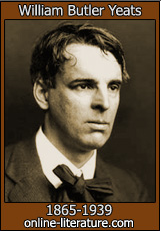
Among Irish poets, the only one I get is William Butler Yeats, and I happened to be in Sligo last month where he wanted his remains buried after he died back in the thirties. He was born in Dublin, raised there, and in England on and off, but his heart was in Sligo where he spent summers. His early poems were esoteric and seemed overly stylish, but his later stuff was much more resonant to my ear, especially The Second Coming. I knew of it from encountering so many of its lines quoted by other writers of both fiction and non-fiction — before I ever knew the words belonged to Yeats.

Sligo last month
I don’t know where or when I heard it initially, but the line that struck me first was:
The best lack all conviction, while the worst
Are full of passionate intensity.


Who are the best these days? Who are the worst? Well, the best, I think, would be those who take a long view of the human condition. They know something of history — what has worked and what has failed over the centuries, over millennia even. They don’t know all of history; nobody does, but they perceive an outline of how we humans have behaved in times of plenty and in times of want. They understand what governmental systems have been applied and what resulted. Others who see only what’s in front of them — who know only what has occurred during the last few years of their own lifetime. They are the ones full of passionate intensity today, a century after Yeats studied their counterparts.

Sligo last month
Do the best lack conviction? Maybe, or perhaps they have tried long to reason with the passionately and intensely ignorant with little result. Maybe they’ve given up trying to persuade and are saving their energy for when, as Yeats puts it:
Things fall apart; the centre cannot hold;
Mere anarchy is loosed upon the world.


Yeats was born to English privilege. His ancestors were part of Ireland’s protestant ascendancy. He was classically educated but his loyalties were divided between his British colonial ancestors and the Celtic Irish among whom he lived, and to whom he related most. Ultimately, he sided with them against Ireland’s British overlords. He was an active participant in Irish Literary revival but stayed on the sidelines during the 1916 Easter Rebellion and ensuing struggle. He sympathized with the cause, but not with the violence used to gain independence.


Mostly agnostic, Yeats disdained Roman Catholicism but related to ancient Irish mysticism. While most Irish of his time were comfortable with a blend of the two, Yeats was not. He related much more to pre-Christian Gaelic culture and that influenced his poetry. The Great War had just ended when he published The Second Coming in 1919, exactly 100 years ago. The 1916 Rebellion was followed by the Irish Civil War waged until 1922 with the Russian Revolution in the middle of all that as well. Things were indeed falling apart in Yeats’ world.


The great love of Yeats’ life, the actress Maude Gonne, was caught up in both Catholicism and violent rebellion against the British. Yeats proposed to her four times and was rejected four times. She instead married Irish Revolutionary John McBride who was executed by the British after she divorced him, but Yeats carried a torch forever after. He had love affairs and a marriage that produced children, but his personal life was as confused as his theology.


The Second Coming is apocalyptic but vague. He evokes Christian imagery but blends it with ominous images of The Sphinx. Rather than a triumphant return of Jesus Christ, Yeats sees something menacing:

The Second Coming! Hardly are those words out
When a vast image out of Spiritus Mundi
Troubles my sight: a waste of desert sand;
A shape with Lion body and the head of a man…

…And what rough beast, its hour come round at last,
Slouches towards Bethlehem to be born?


Both Christians and secularists today point to signs of an approaching apocalypse, but Yeats had much more reason to suspect it: World War I, violent rebellions in Ireland and Russia, the Spanish Flu killing tens of millions — all that was happening as he wrote The Second Coming. 2019 seems placid compared to 1919.

Tuesday, April 16, 2019

Another Ireland Trip


Me, wife Roseann, Paul's girlfriend Terri, and Paul at old McLaughlin homestead
Daylight was just breaking as I drove out of Shannon Airport in our rental car after a red-eye flight from the USA. Although there were two feet of snow around my house when I left Maine, I smelled freshly-mown grass in Shannon. Birds were chirping and trees were flowering and I inhaled the distinctive fragrance of burning peat from a nearby chimney. My wife and I had a couple of days to kill before heading north to meet my brother and his girlfriend in Carndonagh, Donegal on the Inishowen Peninsula to show them the farm where our great-grandfather, James “Wee John” McLaughlin was born in 1878.

View to the Atlantic over Ballyliffin from hill in rear of property
We drove to the old monastery at Clonmacnoise near Athlone in County Offaly on the River Shannon. It had been established by St. Ciaran in 544 AD as a center of teaching and learning. Along with St. Patrick and others, Irish monks brought civilization to what had been a collection of savage tribes in Ireland. As if that weren’t enough, they then preserved European civilization after Germanic barbarians overran the western Roman Empire by harboring other monks who brought precious manuscripts with them containing much of the accumulated knowledge of Rome. Monks from Clonmacnoise, Glendalough, and other Irish abbeys made multiple copies and redistributed them in western Europe after the barbarians had settled down.

Clonmacnoise
After revisiting our ancestral McLaughlin homestead in Inishowen, my wife and I headed south to explore the Beara Peninsula which straddles Counties Cork and Kerry where the Sullivans and Harringtons, also on my father’s side, originated. We stayed at a B&B in Kenmare which is central to Beara, Dingle, and Macroom, Cork near where other ancestors, the Mahoneys, lived.

Lagg Church Inishowen
The Dingle Peninsula on the southwest coast has the most stunning landscape in Ireland. I haven’t been everywhere, but I’ve seen quite a bit of the country and I have to agree with several others who consider Dingle the prettiest. My wife and I visited there ten years ago but it was snowing sideways and visibility was poor. Last week the sun was in and out and we spent most of a day driving all over it. All of Ireland is charming but Dingle with its steep mountains down to the sea is quite dramatic.

Dingle
Returning to our B&B in Kenmare, the Garmin GPS unit directed us through the Gap of Dunloe, across The Black Valley, and on through Moll’s Gap. I would not have chosen that route if I knew what was involved. It’s a one-lane road for almost the entire eleven kilometers snaking up high and down low through switchbacks and around glacial boulders that have toppled into the two gaps and between which the car barely fit. I shifted into low gear and crawled around each sharp turn in case another vehicle was coming the other way. If there were, he or I would have to back up to a wider spot and drive past each other without breaking off our mirrors. My wife was almost in a panic several times, while I strove to resist the contagion of her anxiety as I steered.
Dingle
For her it was like riding on the scariest of roller coasters as we traveled through several such gaps and passes all over the mountainous regions of Ireland. She would marvel at the stupendous views, often saying: “Look at that!” but I simply couldn’t. I had to concentrate on the road ahead lest we drive off a cliff into oblivion. There are very few trees in Ireland which allows for wonderful panoramas, but it also reveals hair-raising views of how far down our car would fall off a steep mountainside before ever hitting bottom.

Dingle
Not a country renowned for culinary skills, it used to be said that an Irish seven-course meal was a six pack and a boiled potato. Trying to keep down expenses, we sometimes purchased our dinner at the deli counter of a local supermarket and went back to our room at the B&B to eat, but when we ate at a restaurant or a pub on this trip we were quite pleased.
Dingle
Wherever we went there was talk of Brexit both in the North and in the Free Republic of Ireland. All are disappointed that negotiations are extended for another year. They want it over with but neither side wants a “hard border” between Northern Ireland and the Republic which may result. Ireland ships a lot of food to the UK and Irish people are unsure of how trade conditions would change. Some in the North think reunification of Ireland north and south might happen. If Scotland breaks with the UK, Northern Ireland may as well. We toured Derry’s Walls and got a first-hand account of the troubles there, now quiet after the Good Friday Agreement negotiated by former Maine Senator George Mitchell has held for twenty years now.

Inch Strand Dingle
Many McLaughlins were caught up in that conflict over the centuries.


Tuesday, March 19, 2019

Irish Diaspora


It’s St. Patrick’s day as I write this and I’m not wearing anything green. If I ever have in previous years, it’s been accidental. I’m American, a proud citizen of the USA and I’m very conscious of that whenever I’m traveling in another country, including Ireland where I’ll be visiting for the fourth time in a couple of weeks. Though all my ancestors came from there and 97% of my DNA matches that of people who live in northwest Ireland, West-central Ireland, and southwest Ireland, I’m still very much an American.


That my ancestors came from the west of Ireland means they lived “beyond the pale” — that is, they lived outside an area controlled by the British (around Dublin) called  “the pale” in the 14th and 15th centuries. My people resisted submission to foreign rule so they were banished westward, again and again, to areas with poorer and poorer soil. In the 1600s when Oliver Cromwell invaded Ireland, they were pushed back still further and sent “to hell or Connaught.”

Yours truly in The Burren, 2009
Thousands were sold into slavery in the West Indies during that time and Connaught (especially an area called The Burren) was an area about which it was said at the time “to have not wood enough to hang a man, water enough to drown him, nor earth enough to bury him.” All were evidently very poor, which is why so many left Ireland for America. Life was very difficult long before the potato famines of the 19th century which only made it worse.


In spite of all that, the little leprechaun with his fists up on the logo of “Fighting Irish” sports teams at the University of Notre Dame does not offend me. Neither does the one of another leprechaun spinning a basketball on the index finger of his right hand while balancing on a shillelagh with his left which the Boston Celtics use. No Irishman or Irish-American, as far as I know, has objected to the stereotype that Irish people are prone to fighting. They are. As for the other well-known stereotype that the Irish are prone to drinking, that shoe fits too. It certainly has for my ancestors going back four generations at least. Paddy wagons were so named because they were usually filled with Irish immigrants named Patrick, or “Paddy” who were arrested for drinking and fighting.


Are those attributes part of Irish DNA or have they been socialized into us for generations under Viking and then British oppression? Both? No one knows for sure but at least we’re not overly sensitive about them, unlike so many other kinds of people who lead campaigns demanding certain logos and mascots be changed. Yeah, the Irish have suffered, but any student of history knows that no ancestral groups, anywhere, have been spared suffering from starvation, war, slavery, and all the other nasty things we humans do to each other.


Is it true what Matt Damon’s character in "The Departed" said about the Irish — that: “This is one race of people for whom psychoanalysis is of no use whatsoever”? How about what Thomas Cahill said about the Irish in his book, How The Irish Saved Civilization: “They pursued the wondrous deed, the heroic gesture: fighting…drinking, art — poetry for intense emotion…” Was he correct? Perhaps, but no Irish poet I’ve ever read stimulated intense emotion in me. They don’t reach me the way Robert Frost does.
My DNA map blowup for County Cork

In America, my ancestors became coal miners, policemen, domestic servants, laborers, and streetcar drivers. Their offspring — my uncles, aunts, cousins, and so forth — have joined all the professions and many are doing quite well. We’ve assimilated fully and that’s good for America. I’m struggling to find information on my great-grandfather, Eugene Sullivan, after whom my father was named. Born in County Cork, Ireland, he came over in 1900 and became a cop in Cambridge, Massachusetts. On the boat, he met his first wife, Mary Mahoney, also from Cork as the family story goes, who bore fourteen of his children in thirteen years before dying in 1917 at only thirty-nine. My grandmother, Mary Sullivan, was the oldest. She married and bore my father at nineteen in 1922 and five more children as well.

Great-grandfather Eugene Sullivan
Mary Mahoney’s mother, Kate Mahoney, also bore fourteen children back in Ireland and she lived to be sixty — beyond average life expectancy for a woman in that time and place. My own mother had eight, and she is still with us at ninety-four with grandchildren and great-grandchildren too numerous to count. Three more are gestating, but that is not the norm in America today. If it weren’t for immigration, the US population would be in serious decline. Few native-born Americans want children anymore. They have dogs instead.

America is changing and so is Ireland. I want to experience as much of it as I can before it changes into something that would be unrecognizable to my ancestors.


Tuesday, February 12, 2019

Ancestral Stones


Bug Light Park
Though it was still very cold last weekend, I felt the hope of spring. Maybe it was the angle of the sun, the heat from which was melting snow and ice even when the air temperature was well below freezing. As I ran along the waterfront at Bug Light Park Sunday morning there was no activity in Portland Harbor. Only one ferry to Peaks Island was moving and that had docked by the time I began. There was a quiet I seldom perceive down there. Very few people were stirring, only a couple dog owners out for a walk. It was cold, but the air wasn’t moving and the sun felt warm on my face. That hope of spring is an ancient thing for people in northern climes.

Stone circle in County Cork
I just booked my fourth trip to Ireland, the land of my ancestors, which is amply sprinkled with prehistoric stone formations everywhere going back five millennia. No one knows for sure who built them but archaeologists are slowly piecing bits of evidence together which indicate that many if not most of the curious structures are oriented according to the solar calendar — to confirm that yes, the sun is getting higher each day and spring will indeed return. People around the world are familiar with Stonehenge, which is the largest of numerous other stone circles all over England, Scotland, Ireland, and the Atlantic coast of France.
Newgrange
Human remains, sometimes cremated, have also been found around these stones in Ireland. Some such formations are enormous like Newgrange in the Boyne River Valley which predates Stonehenge and the Egyptian pyramids. We don’t know for sure who built Newgrange, but whoever those people were, they were skilled at working in stone. As with Stonehenge, they moved stone from many kilometers away to build and we don’t understand how they did so. Unlike Stonehenge, Newgrange (and two other huge mounds near it) was also a passage tomb built with corbeled stones and covered with still more stones to make a tumulus covering more than an acre. Like Stonehenge, it was oriented to sunrises on the solstices.

Newgrange
Other stones the size of automobiles are arranged all around Newgrange and inscribed with spirals and concentric circles the meanings of which no one knows. When I visited there I was told by officials on site that they were close to an understanding and a report would be issued within months. I’ve been waiting ten years and there’s been no report.
Isle of Doagh
There are similar concentric circle designs carved into stones on the Isle of Doagh on the Inishowen Peninsula in Donegal which is the northernmost part of Ireland. When I was there on my first trip, I wasn’t aware of those stones, but I’ll be spending several days on Inishowen again because it’s the land of the McLaughlins where my great-grandfather was born. I’ll be sure to look for them this time.
Another in County Cork (photo by John Banagan)
My great-grandfather, James whom I never knew, was born in a little village called Cloontagh but he emigrated to Boston from the nearby Isle of Doagh. My brother Paul and his girlfriend will be with us for a few days. He’s going to Scotland first and we’ll meet up in Donegal after he flies in from Edinburgh. It’s his first trip to Europe.

Enforced by the British in Ireland
After Paul flies back to the USA my wife and I will head south to County Cork where other branches of my family originated — the Sullivans and Mahoneys, also on my father’s side. I’ve discovered where and when some married and where and when some died, so if I have time maybe I can find their homes. Maybe not though, because they were Roman Catholic and, as such, they wouldn’t likely have inherited real property since it was illegal for a Catholic to own property in Ireland until 1792. They were born in the early 1800s.


On the way south from Donegal to Cork, I can pass through Limerick where John Fitzgerald, great-great-grandfather on my mother’s side was born July 4, 1836. That information should be specific enough to perhaps find data on his parents, Patrick and Catherine, about whom I know nothing but their names. The further back I go the more names there are, but records become harder to find, so perhaps I will reach dead ends during this trip. Knowing a few things about ancestors who lived and died there will help me feel connected to the land as I explore it.


The ancestors I’ve learned of so far were all poor. The McLaughlins couldn’t afford stones to mark their graves in Donegal and I may not find any for the Sullivans or Mahoneys in Cork either. However, I will see plenty of the standing stone circles erected five thousand years ago to mark passing seasons — and the graves of more distant ancestors. Those are everywhere.