Monday, January 18, 2016

John Kasich, Establishment Republican


Near the end of the John Kasich interview at the Conway Daily Sun last Friday, I asked him what was a president’s single greatest responsibility. “To lead,” he said, “using the bully pulpit.” Then he said his wife told him that, as governor, he was the “father of Ohio” and he should act like it. That got a chuckle from everyone present. “You have to carry yourself a certain way.”
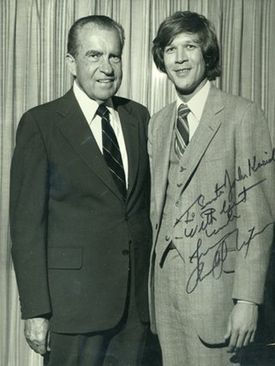
Okay. We were all young and stupid once

Most would argue the president’s single greatest responsibility is to protect the nation as commander-in-chief, and that’s the answer I was looking for. His “To lead” answer could, I suppose, be manifested by “support[ing] and defend[ing] the Constitution of the United States against all enemies, foreign and domestic,” as federal officials must swear to do. 
Governor John Kasich seems like a nice guy, easy to talk to and easy to like. As a presidential candidate, however, I found him underwhelming — too nice, maybe. He lacked steel. His answers to most questions during hour-plus interview were vague, avoiding specifics. He couldn't be pinned down and I’m not sure if that was because he lacked sufficient knowledge of the issues or because he wanted to remain nebulous. I suspect the latter.
After participating in the South Carolina debate the night before, he arrived on a big purple tour bus with “Kasich” emblazoned on the side. When one of us zeroed in on something, he’d often say he couldn’t remember and call on one of the handlers named Chris who stood off behind me. Chris either didn’t answer, or if he did it was in such a low tone I couldn’t hear him. My digital voice recorder didn’t pick him up either.
My first question was about education, which had been brought up earlier. I told him I started teaching before there was a federal Department of Education and we got along just fine. He asked what I taught and I told him “US History, civics, and economics.” I said I retired early because there was so much paperwork and so many meetings required by federal regulations that I only spend half my time actually teaching, which is what I loved. I asked, would he cut the federal government by eliminating the US Department of Education? Well, he wouldn’t be pinned down. He said there had been votes on it in Congress but it never passed. Sun publisher Mark Guerringue pressed him saying, “So you would eliminate the Department of Education?”
Kasich paused, then said, “There would still be a framework there.” Then another long pause, after which he said, “I ain’t sayin’ any more than that. I am not gonna be Republican is gonna sit here and say ‘I’m going to eliminate the federal Department of Education.’ Sorry.”

“How about vouchers?” I said.
“But they’re not going to have any… The-the money’s gonna come here, okay?” Another pause. “I-I-I’m not gettin’ in… I’m not — I’m not goin’ there. I’m not goin’ to be… I’ve been through this once. I’m not havin’ people runnin’ around sayin’ ‘Oh they want to kill education!’ Ahh, vouchers and all that? I’m all for it. We voucher everything, ahh, vouchered in Ohio, ah, charter schools, but I want you to run the schools. If I’m president, I want you — I don’t want to run the schools…”

“And we could,” I said.

“Yeah,” He said, “Well, I hope. I would hope you would. I’m not — I mean I’m tellin’ ya, these schools are tough to change…”

“Oh yeah,” I said. 
Then he went on about legislation in Ohio that allowed state takeover of under-functioning schools and other matters. I felt satisfied to pin him down on his support for vouchers which, if passed federally, would effectively kill the teachers’ unions — the Democrat Party’s biggest single funders — and free public schools from their stranglehold.

Another questioner brought up Iran and I followed saying: “…When the Iran deal passed, it looked like Republicans in the Senate pretty much gave it to [Obama] by saying we don’t need a two-thirds majority vote to approve this and passed a bill saying…”
Senators Menendez and Corker wrote bill that caved in on Iran

“I called for that,” Kasich interrupted. “I said there was a way, I thought, that you could avoid the filibuster… but for some reason the Republicans didn’t do it. I can’t answer that question…” Then he called on Chris again who didn’t have an answer either


“If it’s a treaty,” I said, “the Constitution requires a two-thirds vote by the Senate, but Republicans passed a bill which allowed it to happen with a simple majority.”
“No,” he said, “I think what happened was they couldn’t have a vote on it because the Democrats were filibustering…” He said it was wrong to have an agreement without Congress voting on it, but he avoided addressing the Senate’s constitutional responsibility to approve or disapprove a treaty. “They didn’t have enough votes to get a vote,” he said.

“With a two-thirds majority,” I repeated. “Advise and consent…”


“Yeah,” he conceded. “It’s the way I’ve always thought it should be done.”

“That’s what the Constitution says…” I said yet again.

“…But they would never get to the point where they could have a vote because of the filibuster.”

“So they basically gave in,” I said, “by allowing it to be called something other than a treaty that would require…”


“No,” he interrupted again, “They tried but they couldn’t get the votes. Now they could have used the mechanism to say, no, it’s gotta be a 51 vote that gets us to the next issue but they couldn’t get it done, and I don’t know why they didn’t change that. I can’t answer it.”


Well, I’ll answer it even if Kasich won’t. I believe he was intentionally giving Republicans an out by citing procedural smokescreens and Democrat filibusters that blurred the Senate’s constitutional responsibility. Majority Republicans were complicit in allowing President Obama to circumvent the Constitution by calling a treaty an “Executive Agreement.” Kasich’s fellow establishment Republicans avoided a confrontation with an out-of-control executive as they have on so many other issues in the past seven years — either because they haven’t got the stones, or because they simply lack principles.
podcast of interview

That’s why the Republican base is so sick of the party establishment. That’s why they’re supporting outsiders like Trump and Cruz, and not insiders like Ohio Governor John Kasich.

Tuesday, January 12, 2016

Carly vs Hillary

Talk about contrasts. I interviewed both women currently running for president the same day: Carly Fiorina by telephone in the morning and Hillary Clinton face-to-face in the afternoon of December 29th. Carly is conservative and Hillary is a leftist. Carly spent her career in the private sector, becoming the first and only female CEO of a Fortune 50 company. Hillary has spent her career in government. Carly is a leader. Hillary is a manager. Carly has a positive favorability rating. Hillary’s is negative. I’d love to watch them debate one on one.
They both appeared on the same “Meet the Press” broadcast in September, though at different times, and I asked Carly: “Chuck Todd interviewed Hillary Clinton first and he seemed to be almost worshipful as he did so. Then you came on and he got the daggers out. The tone was drastically different [because you’re a pro-life woman]. If you should surge in the polls, do you see mainstream media as a possible obstacle to your nomination and election?”
“Well, the mainstream media is an obstacle to any conservative nomination,” she responded. “The mainstream media is hopelessly biased. This is not a news flash, and Chuck Todd was hostile, in part, because he knows, as Hillary Clinton knows, as the mainstream media knows — that I am Hillary Clinton’s worst nightmare…”
“I would agree with that.”
“…I am her worst nightmare because she won’t be able to talk about the things she wants to talk about. She wants to talk about the ‘War on Women.’ She wants to talk about the historic nature of her candidacy. She wants to talk about anything but her track record and her accountability, and I will force her to talk about those things. So, the fact that the mainstream media is not on my side is not a news flash. The question is: who is going to be our nominee? Who is tough enough to stand up against that and throw every punch back in their face? And I think I’ve demonstrated I have the capacity to do that, and if we get another nominee that can’t and Hillary Clinton is gonna win.”
“I think about what happened to Sarah Palin early on when she was surging in the polls,” I said. “She became almost demonic to the mainstream media, so you’re expecting that I would assume — a similar kind of assault on you.”
“Of course, of course. Will they try it? Yes. Will it work with me? No.”
As one of the outsider candidates for the Republican nomination and I asked her about Republican leadership in the Congress. She said, “I’m disappointed in the leadership of the House and the Senate. I made no bones about that. [I’m] disappointed they passed the Omnibus Spending Bill. Increases our debt. Increases our spending levels and there are a couple of good things buried in there, but basically the Democrats got what they wanted, so yeah I’m very disappointed. Frankly all of my energy right now, and I think where most of our energy needs to be for the time being is electing a nominee who can beat Hillary Clinton. Because it’s pretty clear that without leadership in the White House, we’re not going to get leadership that can change things for the better in the House and the Senate. Tom, you’ve probably heard me say before, there’s a big difference between management and leadership. The political class of both parties are managers.
They operate within the system. Well, operating within the system isn’t working for the American people anymore. It’s why I’m running for president. It’s why I’ve rolled out a blueprint to take back our country. Because until you challenge this system at its core — by for example radically simplifying the tax code — and changing the way government budgets our money, until we change this system at its core, — which is going to take an outsider with executive experience — we’re going keep getting deals we don’t like. Government is going to keep getting bigger and bigger and bigger as it has for forty years under Republicans and Democrats alike. You can’t keep doing the same things and expect a different answer.”
“The UK recently declared the Muslim Brotherhood a terrorist organization,” I said. “Do you think the United States should also?”
“Well, it’s clear they are. Declaring someone a terrorist organization doesn’t necessarily mean anything with this administration. Yes, I think it might be helpful, but what I think would be more helpful is if this administration actually had a strategy to defeat ISIS. If Hillary Clinton actually had a strategy to defeat ISIS. She doesn’t. If Donald Trump actually had a strategy to defeat ISIS, he doesn’t. We need to defeat ISIS. Let’s just start with that, because they are the most clear and present danger… This administration, without a doubt, has been, umm, a kind way to say it would be say ‘overly politically correct.’
An accurate way to say it would be ‘delusional.’ They have been denying the nature of the threat. They have been willful in terms of ignoring facts. It is delusional to go to Paris a couple of weeks after a terrorist attack and talk about global warming. And it is ignoring of the facts to continue to say: ‘Our strategy is working,’ and ‘ISIS is contained,’ the day of a terrorist attack in the United States.”
Podcast of my Fiorina interview

I’d love to watch Carly debate Hillary this fall, but first she has to win an uphill fight for the Republican nomination.

Saturday, January 02, 2016

Interview with Hillary Clinton about Benghazi


“Somebody’s lying,” I said to Hillary Clinton. “Who is it?”

“Well, it’s not me,” she answered. “That’s all I can tell you.”
Tom Eastman, Mark Guerringue, Hillary Clinton

This was last Wednesday when Hillary’s huge entourage returned to The Conway Daily Sun’s office for another interview. She’d been there in 2007 during her first presidential campaign but I was still teaching then and I missed it. This time I really wanted to be there, so I drove twenty-five miles in a snowstorm, hoping she wouldn’t cancel. She didn’t.
Few journalists are able to pin her down because she controls who gets to ask her questions as well as what those questions will be. I don’t think she was expecting any tough ones at the Sun interview. Sun publisher Mark Guerringue’s opening comments included a reference to the Benghazi attack and her conflicting claims about what caused it. She referred to several congressional investigations, saying: “If people don’t want to accept the facts, there’s nothing I can do about that… and for people to use [Stevens’] death, Seans’s death, and the death of the two CIA contractor’s for political purposes really dishonors them and… their whole purpose is to somehow derail me. And I understand it’s nothing but politics to them but it’s not just politics to me.”

I inserted myself at this point, saying: “I have a specific question about that if I could interject.”

“Sure,” said Mark.
Turning to Hillary, I said, “You mentioned the families of the Benghazi victims and the discrepancy Mark brought up about your email — or conversation maybe — with your daughter…”

“Um-hmm,” said Hillary.

“…about it being an al Qaida-like group, Ansar al Sharia. Then you told an Egyptian diplomat in a phone conversation that it was a planned attack and not a protest. Umm, but then, when the bodies were brought back, you spoke to the family members and you told them, they say that you told them, this was a spontaneous demonstration. And then George Stephanopolous asked on This Week: “Did you tell them it was about the film?”
Hillary on This Week

“Um-hmm,” she said.

“And you said, ‘No.’ Now, somebody’s lying…”

“Well first let me say,” she interjected, but I pressed on.

“…Who is it?”

“Well, not me. That’s all I can tell you,” she continued. “But, you know, people were incredibly emotionally distraught. Let, let’s give everybody a little bit of breathing room here and recognize that, [pause] There — I mean I-I’m trying to remember what is in the public record and what isn’t. Let’s just say that some of the families didn’t even know that their sons were working for the CIA and were in Benghazi. This was a huge emotional blow, and I’m very sympathetic to that. I can only tell you what the facts were. That period when I talked to the Egyptian Prime Minister was in that bubble when we thought there was a terrorist group taking credit for it, and that’s what we said. And when they withdrew, and when the intelligence community, led by the CIA, basically said we don’t know yet. Because remember, the CIA and the intel community was guiding us about what they thought happened and we had to rely on that. We didn’t have any independent information or verification. All this material was coming in. The CIA was sorting it out.”
There were several places here where I wanted to interrupt her, but I restrained myself and let her go on.

She went on, saying, “And if you look at the reports that were done, ah, by the minority on the Benghazi Committee, because it’s a much more reliable source than the Republican majority. They go through, chapter and verse, timing, about what happened, when, and the bottom line is what happened is that people were doing the best they could dealing with information that was changing, and the CIA wrote and approved the talking points that were used, ahh, and it was also true that from Egypt, to Tunisia, to Pakistan, the video was the primary spark that was sending people into protesting against our facilities. All of this was happening simultaneously. It wasn’t either/or as much as people want to get to the bottom of it. It was an amalgam of information and action.”

“I’m sure those people were distraught,” I said.

“Yes,” she said.

“Three different people — Tyrone Woods’ father said — about you — that you said, ‘We’re going to have those people arrested who were responsible for the death of your son.’ Sean Smith’s mother reported, ‘She [Hillary] said that it was because of the video.’ And then Glenn Doherty’s sister said that, “You chose to, in that moment, to basically perpetuate what you knew was untrue.’ So, all three of them say you told them that.”
“Well,” she said.

I ignored her and continued, “And you say you didn’t tell them that.”

“I can only tell you what I know happened,” she said. “I can’t, I can’t speak to them. I can tell you what Chris Steven’s family believes. I can tell you what Sean Smith’s wife believes. I can tell you what other family members believe, because yes,”

“But you didn’t tell them that,” I said.
“I did not tell them that, but, I can’t recite for you everything that was in a conversation where people were sobbing, where people were distraught, where groups of us — the president, the vice president — we were all making the rounds, talking to people, listening to people, and I was in a very difficult position because I had not yet said that two of the four people dead were CIA. Because we were under, ah, very strict directions, from the CIA, not to reveal that yet. So this was — this was — again, part of the fog of war. And, you know, I regret that anybody [pause] has a [pause], you know, an attitude or feeling that I do not [pause] think [pause] is accurate, but I’m not going to do anything other than express my sympathy for them because, I think they deserve it. They were, people who lost their children. They have every right to believe whatever they want to believe, but the facts don’t bear it out.”
Being part of a team I dropped it there, not because I wanted to — especially when she said, “the CIA wrote and approved the talking points that were used.” — but because I could not dominate the interview with about twenty others present who also wanted to question her.
Carly Fiorina

Coincidentally, that very morning I did a telephone interview with Carly Fiorina, the other woman running for president, and told her about the pending Clinton interview. I said if you could ask Hillary one question, what would it be? Without hesitation, Carly said: “Why did you lie? Why did you lie to American people the morning after the Benghazi attack?” I told her that’s exactly the question I chose. Carly’s interview deserves its own column, which is coming up next.
For three years, I’ve been angry that Hillary Clinton, President Obama, Susan Rice, and others, claimed it was a spontaneous demonstration over a video that killed four Americans at Benghazi and not a radical Muslim terrorist attack. I wrote about it several times including here and here. They knew different, and they said what they knew was not true. That’s lying — but I never heard any journalist or member of Congress ever use that word to Hillary’s face — and that’s what I was determined to do when I had the chance.
I did, and the Sun’s account of the interview, containing an accurate but abbreviated mention of my exchange with Hillary, was linked by The Drudge Report. From there it was picked up by dozens of media outlets. My intent here is to give readers a complete and accurate account our five-minute exchange.
Podcast of interview

Tuesday, December 29, 2015

Voting And Dating


Do voting for president and choosing a mate have anything in common? In both instances, Americans are making an important decision: Whom do they want for a years-long relationship? Immature people and voters tend to look for the perfect mate or the perfect candidate. The more mature recognize there are no such things. None of us have to marry, but as citizens we have a duty to vote.

The end of a marriage or of a presidential term is often unpleasant, but the beginning of each is a honeymoon. The partners cannot get enough of each other, and both sides revel in a glow. During the 2012 election cycle, actress Lena Dunham of the HBO production “Girls” made an ad urging young women to vote for Barack Obama. In it she said: “Your first time shouldn't be with just anybody, you wanna do it with a great guy.” Although Obama was running for reelection, Dunham was pitching to young women or “girls” in her demographic who had just reached voting age and would be voting for the first time. As Dunham described it: “My first time voting was amazing. It was this line in the sand. Before I was a girl, now I was a woman.”
Most of us fall in love with someone we eventually marry. He or she seems perfect in every way, but as time goes by we notice flaws. Minor imperfections can be accepted as part of the package if the relationship is to continue. If we refuse to accept foibles, they lead to separation and divorce. Major flaws such as lies and infidelities are often considered unacceptable and catalyze wrenching divorces — or impeachments. Some of us, however, go to great lengths to deny deficiencies both major and minor, desperate to carry on the perception of perfection, accepting excuses for inexcusable behavior.
David Brooks

Some ostensible conservatives were infatuated with Obama during the 2008 cycle. One, New York Times columnist David Brooks, wrote about meeting then-Senator Obama for the first time: “I remember distinctly an image of — we were sitting on his couches, and I was looking at his pant leg and his perfectly creased pant, and I’m thinking, a) he’s going to be president and b) he’ll be a very good president.” Brooks got over his Obama crush, but others have not. Leftist MSNBC host Chris Matthews was infatuated with Obama too, describing “a thrill going up my leg” when listening to an Obama speech, and evidently he’s still in love.
In response to the Lena Dunham “First Time” ad, the conservative “Independent Women’s Forum” put one out  called “Boyfriend” in which a young woman is talking to an older woman on a couch, above which hangs a “Hope” poster of President Obama. She opens saying: “I was so excited at first. He seemed so perfect.” The older woman responded, “They always do.” The younger one asked: “Why do I always fall for guys like this?” and the mature woman concluded, “You know you deserve better,”
“Boyfriend was followed up by “Feeling Guilty,” with the same young woman and another older woman who opens, saying: “Feeling Guilty?” The young woman angrily declares, “I supported him for four years,” then seems to soften, saying, “Some of the things that happened weren’t his fault.” The older woman then scolds her: “Why are you always making excuses for him?” The young woman responds, saying: “I miss the way he used to make me feel.”
About a 130 million Americans will cast a vote for president in 2016 and right now they’re sizing up the field, a process is not unlike “playing the field.” Suitors present themselves in their best possible light, as knights in shining armor who will come and save the day. The maidens must decide which “knight” may be suitable, but for no more than eight years.
Some terms are cut short earlier like those of President Carter and the first President Bush, both of whom were considered too wimpy to lead after only four years, but the average lately is eight. According to the McKinley/Irvin family law firm: “The average length of a marriage that ends in divorce is eight years.” 
Approximately 126 million people voted in 2012 and there were almost 59 million married couples that year, or about 118 million people. Campaigns seem to get longer each four-year cycle and maybe candidates’ flaws will be evident sooner. Maybe voters have wised up a bit and will make think longer before “tying the knot.”

Or, maybe not.

Tuesday, December 22, 2015

Grassroots Rebellion

What the left sees as progress — a flood of diverse, multicultural, unassimilated migrants from Mexico, Central America, as well as the Muslim countries of Africa, and the Middle East, many other Americans see as the disintegration of America as they know it. They’re watching similar changes in Europe and worry that western civilization itself is unraveling. They elected a Republican majority in Congress to stem immigration and the enormous growth of the federal government, then watched that Congress capitulate to the president’s big-government, open-borders agenda. These Americans are not in the minority, but their view is scorned as racist and xenophobic by establishment leaders in government, in academia, in mainstream media, and in the entertainment industry, who consider themselves more enlightened.
They’re the people candidate Barack Hussein Obama spoke disdainfully of when addressing elite donors in Marin County, California back in March, 2008: “They get bitter, they cling to guns or religion or antipathy to people who aren't like them or anti-immigrant sentiment or anti-trade sentiment as a way to explain their frustrations.”
These Americans are rebelling now against what they see as an elite establishment coalition. As they watch the West decline, they’re realizing the leaders they elected, as well as the media who report on them, seem okay with the transformation of American that so worries them. So far the rebellion is political with Republican support for candidates they perceive as outsiders. Donald Trump/Ted Cruz Republicans believe big business and big government are symbiotic and prefer a smaller, decentralized government with more power returning to states. Others see no important differences between the two major parties and call for a third.
Their concern is exacerbated by increases in radical Islamic terrorism in both Europe and the United States that governments seem unable to deal with effectively. (Just Monday, however, the UK officially labeled the Muslim Brotherhood a terrorist organization — breaking with Obama who praises the MB.) A recent essay by historian of Islam Raymond Ibrahim sees Islamists rushing into a vacuum created by western decline in Europe and in the United States. Ibrahim calls the unraveling described above as the West becoming a self-hating civilization, and he takes a long view: 
“Once upon a time, the Islamic world was a super power and its jihad an irresistible force to be reckoned with. Over two centuries ago, however, a rising Europe—which had experienced over one millennium of jihadi conquests and atrocities—defeated and defanged Islam. As Islam retreated into obscurity, the post-Christian West slowly came into being. Islam didn’t change, but the West did: Muslims still venerate their heritage and religion—which impels them to jihad against the Western “infidel”—whereas the West learned to despise its heritage and religion, causing it to be an unwitting ally of the jihad.”
Ibrahim scoffed at President Obama when he: “counseled Americans to get off their ‘high horse’ and remember that their Christian ancestors have been guilty of similar if not worse atrocities. That he had to go back almost a thousand years for examples by referencing the crusades and inquisition—both of which have been completely distorted by the warped postmodern worldview, including by portraying imperialist Muslims as victims—did not matter to America’s leader.”
Many Americans have a limited understanding of historical Islam and don’t detect Obama’s distortion. Some do. Others just sense that his explanation is hokey.
The horrors ISIS and other radical Islamist groups are perpetrating today have been more the rule than the exception over the 1400 years of Islamic imperialism. We’re seeing is its resurgence enabled by the retreat of a breast-beating, mea culpa western establishment trying to do penance — Europeans for their colonial past, Americans for using their powerful military to curtail communist expansion and keep oil flowing out of the Persian Gulf.
Though establishment leaders play down resurgent Islam’s threat and trumpet “Islamophobia,” fewer Americans are buying it. They’re fed up with the flood of illegals from our south seeking “aslyum” as well as others from Africa and the Middle East who may or may not be refugees. Our establishment elite portrays both as oppressed, brown-skinned victims of Western imperialism. More Americans are seeing them as foreigners looking to get on the welfare gravy train and drive up the national debt, or, at best, as unskilled laborers who would take jobs away from them and drive down their wages. They also know thousands of illegals from our south have committed serious crimes and they question whether others from Muslim countries will assimilate as Americans.
They see both Democrats and Republicans belonging to the elite establishment and maintaining the status quo and they want to change course. I hope that comes through the ballot box and worry about what may happen if it doesn’t.

Tuesday, December 15, 2015

What The Hell Are We Doing?


If America would ask its young men — and now women — to fight a war, the rest of us must be willing to go all-out to win it. If we’re not, it’s immoral to send them. Soldiers and citizens must understand what’s at stake and have confidence in our commander-in-chief to defeat the enemy. Half-measures won’t suffice. War is all hell, as General Sherman said, and when you’re going through hell, don’t stop until you come out the other side. Go all-out or don’t go.
So, are we going to defeat ISIS or not? It’s not clear. President Obama promised to degrade and destroy ISIS more than a year ago, but admits he doesn’t have a strategy. He’s been bombing ISIS for a year, but not most of the oil trucks carrying oil from ISIS-controlled oil fields, and then only after he drops leaflets first giving them a 45-minute warning! After the ISIS attack on Paris, France bombed hundreds of these trucks and that left Americans wondering. If we’ve been bombing ISIS for a year, why are there so many trucks left for the French? Where are those oil trucks making deliveries? There are only a few possibilities given that they are, after all, trucks.
When ISIS set off a bomb aboard a Russian passenger jet, and Turkey shot down a Russian fighter plane, Russia accused Turkey of buying oil from ISIS. Could that be true? Turkey is allied to the United States. It belongs to NATO. The Obama Administration insisted Turkey is not buying ISIS oil, but ISIS makes $4 million per day selling it and there are only so many places a truck can go, right? Turkey is right next door.
Last month, the UK Guardian reported that: “Turkish businessmen struck lucrative deals with Isis oil smugglers, adding at least $10m (£6.6m) per week to the terror group’s coffers.” The Jerusalem Post’s Caroline Glick reports that: “For nearly two years, we have known that Turkey is Islamic State’s major arms supplier. And for six months we have known that they are their partners in oil exports.” The Daily Beast reports that fifty US intelligence agents filed a formal complaint with US Central Command that intelligence reports were being doctored by senior intelligence officials in the Obama Administration for political reasons. When America special forces killed an ISIS finance guy, they seized his computer with information on ISIS oil sales to Turkey.
Monroe Mann

Monroe Mann, one of my former students, returned from northern Iraq where he’d been a US Army intelligence officer working with the Kurds. He delivered a presentation to all five of my US History classes and his esteem for Kurdish soldiers as allies of the United States was enormous. After Obama was elected, he pulled all US forces out of Iraq and the Kurds were on their own. Today, most analysts recognize them as the only effective opposition to ISIS on the ground — but Obama won’t send them military aid. Why? Because Turkey doesn’t want him to. Historical Kurdistan overlaps Syria, Iraq, Iran, and Turkey — and Turkey is afraid of a Kurdish independence movement. So are the other countries.
Confused yet? It gets worse. After Obama allowed Bashar Assad to overstep his red line on chemical weapons, Russia moved in to support Assad. Iran supports him too. Obama has walked on eggshells negotiating his ill-advised nuclear treaty with Iran and didn’t want to upset the mullahs by undermining their ally Assad. Even though Obama declares over and over that Assad has to go, he has no strategy to accomplish that either. Meanwhile he’s overseeing feeble military efforts against both Assad and ISIS while Russia and Iran openly support Assad and Turkey secretly supports ISIS. Should we be sending any US soldiers into a conflict in which we’re not sure who we’re fighting for or against? When we don’t know who our enemies are or who our friends are?
“War is the locomotive of history,” said Bolshevik commander Leon Trotsky. Teaching US History, my approach was to analyze each war’s causes, major battles, and most of all — its effects, after which students were tasked to consider whether it was worth fighting. Then I’d tell them to imagine themselves as 18-year-old males during each war and ask themselves if they would have volunteered to fight in it. I also taught current events and we followed Desert Storm, the Afghanistan War, and the Iraq War as they happened. Like Monroe Mann, many went on to fight. Some still are.
They’d ask me what I’d have done, but I’d defer until each had taken a position and defended it. If I were teaching about the situation in Syria and Iraq today, I’d have to tell them I would stay home until we figure out what the hell we’re doing.