Showing posts with label photography. Show all posts

Thursday, November 19, 2020

ART AND PHOTOGRAPHY


Sunrise over Moose Pond Bridgton

Can photography be considered fine art? That depends on what one thinks art is, and I suspect there are differing opinions. Few would disagree that Michaelangelo and Da Vinci were artists, but what about Ansel Adams?

Last summer I applied as a photographer to Gallery 302, a cooperative art gallery in Bridgton, Maine and was accepted. Everyone exhibiting there is called an artist, but not all the three dozen or so “artists” agree with that designation for photographers. Everyone has to contribute in some way to the functioning of the gallery, so when the gallery president discovered I was a columnist, she asked me to write up something to answer the question that opens this column.

Autumn sunrise Eastman Hill, Lovell 

I’m comfortable calling myself a photographer, and I guess I’m a professional photographer too since people have paid me tens of thousands in exchange for hundreds of my photos, but I’m not completely comfortable calling myself an artist. Ansel Adams said once that: “Art implies control of reality, for reality itself possesses no sense of the aesthetic. Photography becomes art when certain controls are applied.”


Ansel Adams

Whoever thinks, even for a few seconds, before snapping a shutter is “applying certain controls.” 


Ansel Adams

Aesthetic” means “is concerned with beauty or the appreciation of beauty.” As for the controls he applied, Adams liked his images sharp with broad tonal range, and his best-known work was in black-and-white. Although that medium doesn’t grab me, I see they’re good. His less-well-known color images, however, are stunning. After viewing those, I have no trouble calling Adams an artist. When he talks about “a sense of the aesthetic” he’s talking about beauty — and that is experienced on a feeling level. 


Crystal Lake Harrison, Maine

If I should photograph a document with my iPhone, for example, there’s no feeling involved; it’s a utilitarian gesture. But when I pull over somewhere to photograph a tree, a landscape, a sunrise or a sunset with a DSLR, I’m perceiving beauty and attempting to capture some of it. I’m compelled to preserve as many aspects of it as I can, for myself and for others with whom I may share my images.


Autumn sunset Lovell, Maine

Beauty is often fleeting. Certain kinds of light render it visible, enhance it. Whatever I see when I pull over can disappear by the time I get my camera out of its bag, turn it on, set the aperture, zoom in our out, and focus. It only takes a second for the light to change. As Darylann Leonard, one of the other photographers exhibiting at Gallery 302 put it: “In my opinion a lot of work goes into a shot -- studying the light, driving around for hours scouting locations, going to a location 20 times before getting a shot that is worth processing, spending hours hiking to get different perspectives, spending hours in the cold, spending a lot of time and thought to compose an image, getting up at early hours to catch the good light etc…”


By Darylann Leonard

She’s right of course. I’ve done those things too and it is work, but not in the sense of drudgery. It’s work I love to do. There can be frustrations when the light changes just as I’m getting ready to shoot, but the payoff after getting it right is extremely satisfying. Sometimes I’m very lucky to stumble onto a beautiful scene and capture it right away with little effort. Painters, too, often use a camera and then paint from the photo — emphasizing this, leaving out that, mixing colors to either match the photo or enhance it.


My wife Roseann's garden

Today’s high-end digital cameras capture lots of details in a “file” that require sophisticated editing software to bring out. The software can also make the photo look like a watercolor, or oil painting, or nearly any other kind of rendering imaginable. As Darylann put it: “The second dimension is processing. I think photographers develop styles of [digital] processing similar to dark room days. [They] study the execution of bringing out certain dynamics [buried in] an image. So I guess my argument would be that photographers most definitely can fit into the category of fine art, but in [our] own unique way[s] — just as there are different media for painters.”


17,000-year-old cave painting Lasceaux, France

Though I had no aptitude for either, I admired fellow students in third grade who showed talent for drawing and painting. Once I tried to copy an image of a robin on a tree branch, and I still recall how good it felt when my effort crudely approximated the original. Image-making is an urge inside all of us, and always has been. Seeing the 17,000-year-old cave paintings of Lasceaux, France, I feel a connection with the artists who created them so long ago. The act of image-making is rewarding in itself, independent of any pecuniary benefit that may result.


Wednesday, November 04, 2020

REMEMBERING NOVEMBER


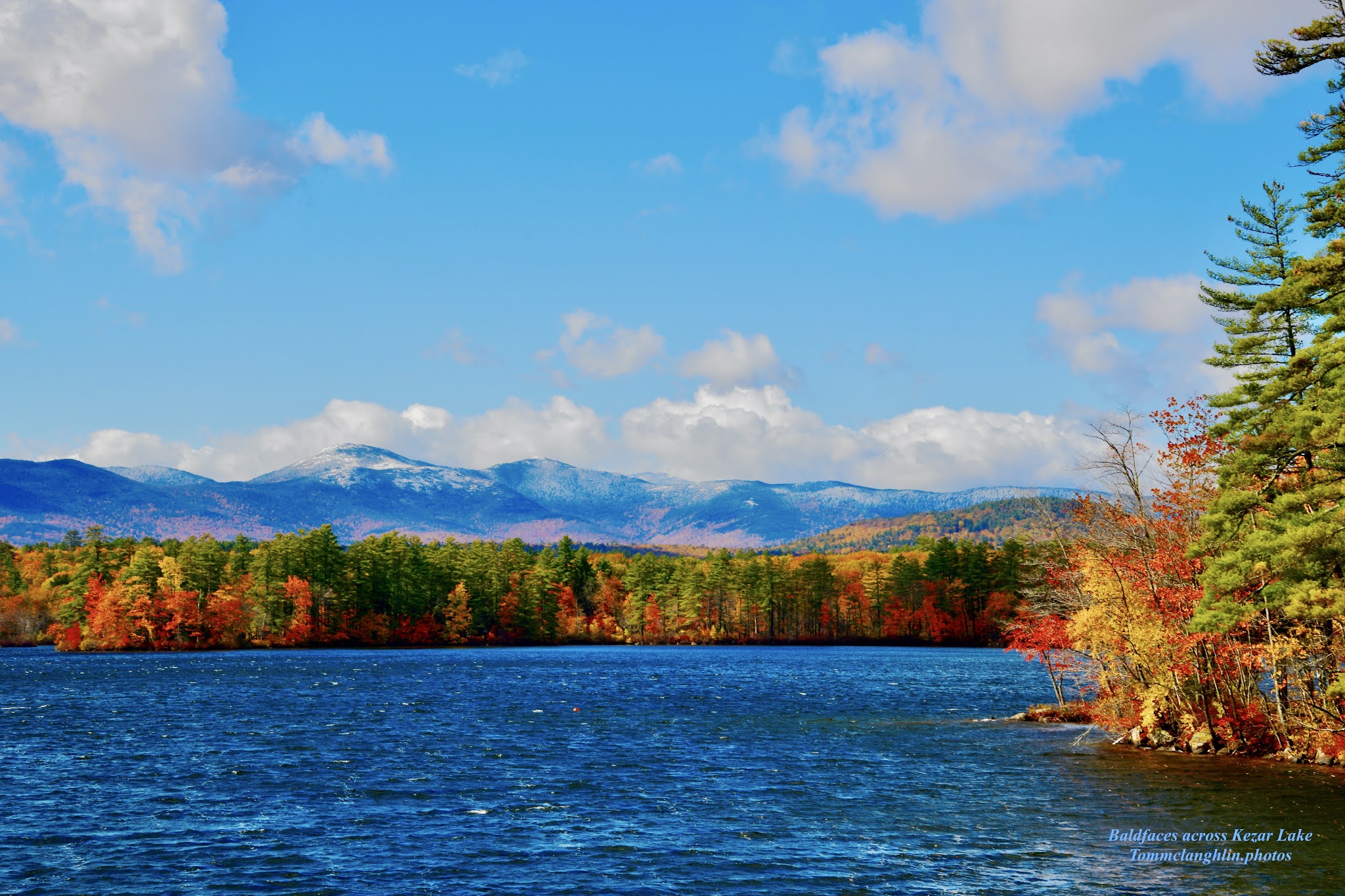
Lovell in October

There’s a familiar feeling I get in the fall when the air is cool and the wind is blowing. Fond memories are triggered from over forty-three years ago when I moved my young family to rural Lovell, Maine from Massachusetts. We got to our new old house in August, 1977 and by early October we were settled in. I had a few weeks in my new job behind me and took my shotgun into the woods after school to hunt partridge.

Western Maine in October

It was only a short walk to the overgrown farmland down the street that was promising habitat, but I only had about ninety minutes before the sun set and I would have to walk home for supper. No one freaked out to see a young man carry a shotgun down the road. In the Massachusetts I had left, some might have called police but that wouldn’t happen in Lovell. My formerly-rural town twenty-five miles outside of Boston had turned into a suburb while I was growing up. It changed and I didn’t belong there anymore. Rural Maine became my home and I’ve been here ever since.

My house in Tewksbury now


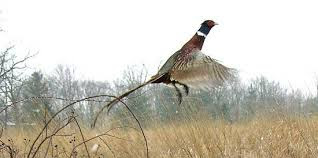
As a boy in then-rural Tewksbury, Massachusetts, I would accompany pheasant hunters in the woods near my house. I don’t remember their names; I met them while in the woods with my homemade slingshot and pockets full of smooth stones of appropriate size and shape. I was a hunter too. They knew that when noticing my armament and demeanor. Memories of one guy are still vivid. I saw him before he realized I was there. I was waiting to get a shot at a squirrel when I heard him in the dry leaves.


He asked me where I’d seen pheasants and I directed him to an area along a stone wall. I walked along behind him looking to right for squirrels and was startled by a shotgun blast I wasn’t expecting, but turned my head around to the left quickly enough to see an explosion of feathers. The shotgun fascinated me and I would have loved to have one of my own. My father wasn’t a gun owner and my mother, despite my begging, would not let me have a BB gun; hence my slingshot. Over and over, I practiced enough so I could hit what I was aiming at. After that, no squirrel was safe.


Lovell in November


November in Lovell, Maine was wonderful. By the time I got home from school — I was a teacher — there was very little time for deer hunting after Daylight Savings Time kicked in. I had to be out of the woods when the sun went down, but Saturdays and Veteran’s Day I was out there sunrise to sunset. Sundays, the family and I worked on the woodpile. When my brothers moved to Maine a few years later, we hunted together and that was nice. After a while though, I preferred going out by myself. 


I liked the solitude. Seldom did I see a deer but I explored a lot of territory. Leaves were down and, while walking for miles up and down hills, I could see a long way. After supper I would re-study USGS maps of the area and commit them to memory. Though I saw no houses or people where I went, I did see cellar holes. Those wooded hills had once been cleared of trees and covered by farms. Stone walls snaked up and down the hills. Crops grew and animals grazed. The walls were still there. Strands of rusty barbed wire seemed to grow out from the middle of tree trunks like dead branches, but the hills were all wooded again. Farm families who lived and died there were long gone.


Eventually, though, I stopped hunting. Maybe it was because my daughters refused to eat venison. They could always taste it, even in meatballs spiced and cooked in spaghetti sauce. Maybe it was because my testosterone declined with age. I don’t know, but I just lost interest. I still like to shoot in the woods, but now it’s with a camera. I still shoot squirrels which can cause a lot of damage to my property and the other properties I look after. In a way, I’ve come full circle. I can still hit things with a slingshot, but it’s a store-bought one now. I use it to dissuade Canada geese from coming ashore on the lakefront property I manage — and I prefer a .22 for squirrels.


Monday, March 23, 2020

Not Affected Much


Old Orchard Beach Pier at dawn
Virus isolation hasn’t changed my life much. Instead of staying home and guarding my toilet paper, I head out before dawn to Maine’s southern coast for first light. Seldom do I see people, especially in February and March, so social distance is easy. Until recently I had few photos of that area but I have a prospective customer interested to buy some. Even without a buyer, however, there are worse ways to spend time. All of Maine’s winding coastline is beautiful.

Kennebunkport
It’s been cold though and gloves make camera adjustments difficult. When the wind is blowing my eyes tear up but the natural beauty all around me more than compensates for those discomforts. In pleasant surroundings it’s easy to avoid thinking about the virus changing our entire way of life. Will it ever return to normal? I don’t yet know anyone infected but I probably will soon.
Cape Porpoise
After several hours I’m back home downloading dozens, sometimes hundreds of images for editing, and that can take the rest of the day until dinnertime. My wife occupies herself making quilts for the grandchildren and listening to various psychologists lecture on youtube. She’s a psychotherapist and she can multitask like that. I cannot, as my mind can focus on only one thing at a time. Soft piano music won’t distract me while I edit, but nearly anything else will.
Cape Arundel
I like to venture out before dusk and capture twilight as well. As public reaction to COVID-19 progresses, there’s almost as much solitude at dusk as at dawn. Some are out walking but careful to keep a safe distance. We nod to each other and there’s a shared, unspoken sense that we’re all in this together. My wife goes into Shaws or Hannaford at Mill Creek in South Portland early in the early morning during their designated times for older people like us to get what we need.

Old Orchard Beach at dawn
We seldom go out to restaurants anyway so those restrictions don’t affect us. We have all we need and my wife enjoys cooking. I do too, but not as much as she does so my job is cleanup. We watch Special Report the news until seven and then streaming video or just read. The thing we miss most is seeing our grandchildren. We don’t want to infect them and they don’t want to infect us.

OOB Pier at mid-day
We have some fear, however. Two of out daughters are nurses. Both are gearing up for that they see as an inevitable onslaught of seriously ill patients — too many for whom to provide adequate care. Minimizing that scenario is why government wants to “flatten the curve.” One daughter is an ER nurse who just arrived at her new assignment in Portland, Oregon. The other has been pressed to staff an emergency ICU here in Maine for 12-hour shifts alternating days and nights for the duration of this crisis. Though neither has said so, I think they both fear being forced to decide who gets care and who does not.
Cape Porpoise
Can people stay home indefinitely? Some jobs are essential like healthcare workers, police, fire and rescue, keeping the electricity grid running, delivering fuel, and others but small businesses can only be closed so long before collapsing. Most of us expect to get the virus eventually, but how long will flattening the curve take? We’re all going to die of something, someday, and we prefer the dying be limited to the old and sick as much as possible. It’s better to lose grandparents than grandchildren. Writing in National Review the other day, Congressman Chip Roy suggests that flattening the curve may put so much stress on our economy that it cannot recover. Where will we be then? 
Morning at Scarborough Marsh
This fear thing is real and must be addressed. President Trump was criticized for an exchange with NBC’s Peter Alexander. After snarky remarks accusing Trump of trying to “put a positive spin on things” and “giving the American people a false sense of hope,” Alexander asked: “What do you say to people who are scared?” By that time the president was so pissed at the snark that he called Alexander a terrible reporter. It was a missed opportunity for Trump to acknowledge people’s fears and speak to them. Hostile media outlets broadcast only Alexander’s last question and Trump’s angry response. As intended, it made for a terrible sound bite damaging to the president.


Philosopher and mathematician Blaise Pascal wrote: “All of humanity's problems stem from man's inability to sit quietly in a room alone.” How many Americans have been forced to do that lately? It’s not a problem for introverts like me, but then the room in which I sit alone is in a house with other rooms, and I’m aware that my wife, also an introvert, is sitting in another. I know she’s aware of me as well.

Wednesday, December 18, 2019

Diminishing Beauty


Beauty literally stops me in my tracks. It can annoy my wife when she’s in the car because I’ll hit the brakes unexpectedly, pull over, and reach into the back seat for my camera. It might happen anywhere and if I don’t capture that right away it can fade in minutes or even seconds. Photography is about light after all, and light is often transitory, especially with scattered clouds and a storm either building or breaking up. A shaft of light will illuminate something against a dark background and I have a brief window in which to get the shot. By the time I’ve stepped out of the vehicle, turned on the camera and framed the image, a cloud may have blocked the sun and the opportunity passes.


When I am successful though and I pull up the image later on my computer, it’s a great feeling. The photos I like best all convey whatever feeling I had when I saw the scene. If the photo kindles a similar feeling in others it will sell. The ones I’ve been paid for are images of things — landscapes, street scenes, coastal scenes, loons, sunsets, and so forth. Images of my loved ones are among my favorites but I don’t put them on the website. One did get on accidentally once when I was re-sizing a batch of coastal scenes and a shot of my grandchildren looking for crabs on a beach got mixed in somehow. I didn’t realize it until someone ordered a collection of photos and I pulled up the full-resolution version of that shot from my computer. Now it hangs in a northern Maine nursing home.


Shots of my grandchildren when they’re young convey an innocence that has universal appeal. Young children are genuine; they lack pretense. With a zoom lens they don’t usually know I’m photographing them. They see me with a camera so often that they’re seldom self-conscious about it. When they become teenagers, however, that natural, unaffected demeanor fades. They’re not sure who they are themselves and that uncertainty comes through in photos — especially when they know I’m shooting in their direction. Almost never do I ask people to pose because I much prefer candid shots.


All imagery interests me, but especially other photographs. Again, my taste runs toward candid. We’re all bombarded by photos of men and women with physical beauty, but when photographed for advertising purposes they lose their charm. Subjects are paid to be pretentious. In my eyes, that disingenuousness comes through more strongly than anything else the advertiser intends. It’s worse when the models’ affectations have a sexual bent which is increasingly the case.


Often we see photographers following subjects in revealing dress and snapping away as the models try to look alluring. They strike various poses with ostentatious “come hither” expressions. Such scenes are meant to convey the alleged glamour of high fashion but it never works for me. The fakery is so obvious I can never get past it. It must work with most viewers though because that sort of advertising is ubiquitous. Some could be called soft porn, and it is always pushing limits of propriety.


And pornography which no one could call soft has become dangerously widespread with the internet. Images depicting sex without love would define it, and in my youth, Playboy Magazine was considered porn. It might not be labeled such today because still photographs of the Playboy type have given way to digital video. It’s a plague the young and old contract with the cell phones in every pocket. As with drugs and alcohol, pornography is addictive. Continued use requires stronger doses to reproduce the initial thrill and teenagers today produce their own with cell phone cameras. Our culture is increasingly coarsened in the process. Porn destroys relationships from teenage romances to marriages and professional counselors warn us there’s no end in sight.


Consumers are mostly male but females are catching up. A 2011 article the UK Guardian claimed one in three users were female and 17% of women were addicted. Porn actors degrade themselves and watchers degrade themselves vicariously. How widespread is pornography? Statistics vary: anywhere from 15-75% of Americans use it regularly. Extensive revelations of Jeffrey Epstein’s rich and powerful associates abusing underage girls seem to mirror trends in porn users toward child porn, the only kind that’s still illegal.


For how long will it remain so? That depends on how much society values the innocence of youth. Will Epstein Attorney Alan Dershowitz prevail in his arguments to lower the age of consent? Will Republican congressmen persuade Attorney General William Barr to prosecute internet porn producers more vigorously? There are forces at work both pushing and pulling.


Beauty, defined as: “a combination of qualities that pleases the intellect or moral sense,” is becoming endangered when seeing images of fellow human beings. Beautiful landscapes, however, remain plentiful.

Monday, September 16, 2019

New Maine Residents


It’s no big deal to see a wild turkey in Maine anymore. They’re as common as crows these days, but it hasn’t been that long, and I remember the first time I saw one around here. My wife was driving a little school bus in nearby Sweden, Maine when she saw one acting funny beside Knight’s Hill Road after dropping off her last student. Thinking it injured, she took it into the bus and brought it home. I’m not sure I could call it wild though, as it seemed unsure of itself — as if trying to decide whether it was wild or domesticated. That wasn’t too long after Maine had first reintroduced turkeys here in 1978. Now, of course, they’re prolific.

Bald Eagle and Osprey over Kezar Lake
Seeing a bald eagle is becoming routine too. The first time I ever saw one in Lovell, Maine, I saw two. Was it twelve years ago? Fifteen? I’m not sure, but I was doing the dishes at the kitchen sink and noticed two large birds circling each other very high up. I had to squint to notice the white tails, then the white heads. A few years later I saw one in a kind of aerial dogfight with a much smaller osprey over middle bay on Kezar Lake in Lovell. More recently I saw one perched on a branch beside the lake trying to eat a fish as it was being harassed by smaller birds. He flew off clutching the half-eaten fish while being dive-bombed by those pesky little birds.

Harassed Bald Eagle over Kezar Lake
I still stop and stare when I see a bald eagle today because they’re just so majestic, and there aren’t that many of them around yet. About six weeks ago, I saw my first golden eagle soaring above the Spurwink River estuary at Higgins Beach in Scarborough, Maine. I had my 150-600 mm lens with me because I was planning to photograph arctic terns as they dove for small fish. They weren’t active that day and I was about to head back to my vehicle when this huge bird appeared over the water. Someone had told me that goldens are bigger than bald eagles and I figured that must be what I was looking at through my lens. It was huge.
Golden Eagle in Scarborough, Maine
The big bird flew in slow circles looking down to the surface of the estuary for his lunch. He evidently didn’t see anything catchable so he flew back to a perch on a limb on the other side of the river mouth. He was in shadow and I couldn’t get a decent shot of him over there so I waited for him to come back out and go fishing again hoping to get a shot of him diving down and grabbing one. Unfortunately, he never emerged before it was time for me to leave. As soon as I got home I downloaded the images and researched golden eagles to make sure of my identification. It was definitely a golden eagle.

Golden Eagle in Scarborough, Maine
So far I’ve only seen opossum as roadkill here in Maine and have yet to see a live one. It shouldn’t be long before I do though because the roadkill was less than a mile from my house. He wasn’t just “playing possum” as his entrails had burst out over the pavement. Guess I’ll have to study up on their habits so I can hopefully get some shots of a live one.


Last fall I saw a small flock of tannish, heron-like birds with red markings on their heads in the back of a large farm field in nearby North Fryeburg, Maine. I wasn’t sure what they were, but when I saw a notice on Facebook of Maine sightings of sandhill cranes this past summer, I realized what they were. Two weeks ago, I was looking for Indian artifacts along the course of the Old Saco River when I heard their distinct, high-pitched “kuk-err, kuk-err” emanating from a nearby field. I went back to my truck, attached the long lens to my camera, and drove over there.

Sandhill Cranes in Fryeburg
They must have heard me coming because all six or seven of them had turned their heads my way from across the field. I emerged, camera-ready, from my truck and walked slowly toward them. “Kuk-err, kuk-err,” I heard again as they got agitated. I kept walking in their direction until they took off, chattering as they cleared the treetops separating that field from the next. According to an article in the Boothbay Register, there have been nesting pairs of sandhill cranes in Maine since at least the year 2000.

Sandhill Cranes in Fryeburg
It’s big and bulky, but I’ll definitely be packing my long lens on future trips to North Fryeburg — or anywhere else in Maine for that matter. I got myself a larger backpack capable of carrying all I’ll need to photograph all the new residents of our state.

Tuesday, August 27, 2019

With A Master On The Mountain


Babb's "Copley Plunge" Boston Museum of Fine Art
When I contacted Seth Lipsky, a summer friend from New York City who has a place in Waterford, Maine, he suggested we have an early breakfast in Bethel. He had plans to meet another friend there, then go up Mount Washington to paint. As we finished eating, in walked none other than Joel Babb of Sumner, Maine, an accomplished painter of Roman and Boston cityscapes, interior and coastal Maine scenes, as well as other subjects. I was thrilled to meet him because I’ve been admiring his work ever since the Portland Press Herald did a big spread on him exactly a year ago. I saw his exhibition at Portland’s Greenhut Gallery this summer and was sorry to miss his talk there a month ago.

Babb's “Bernd Heinrich’s Brook” 40 by 52 inches
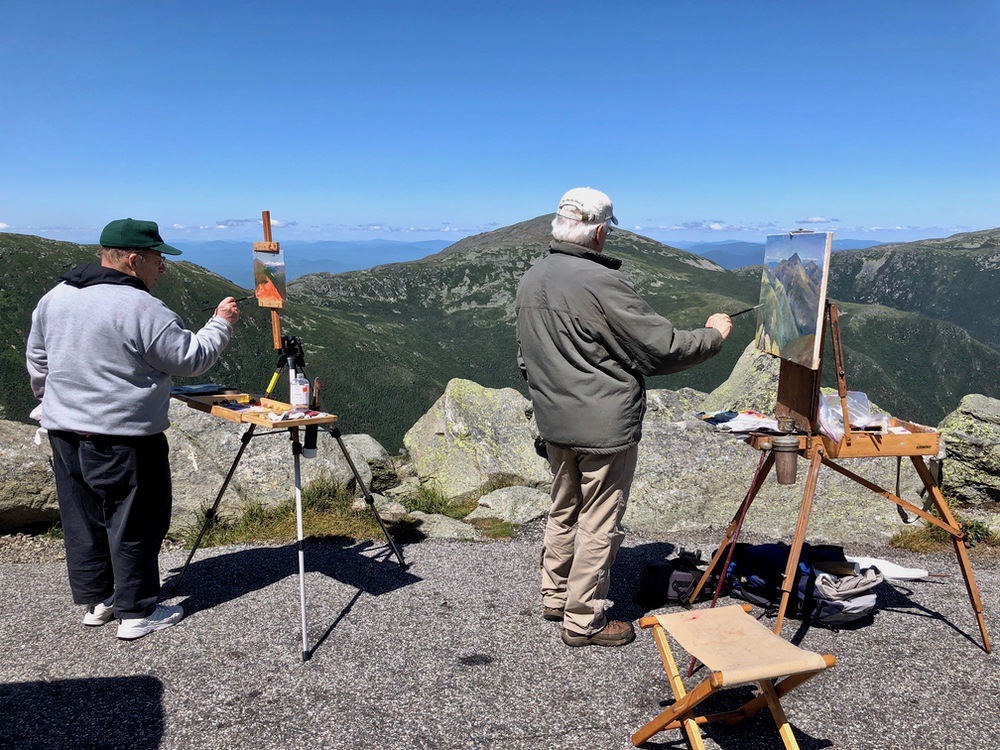
Seth is the founder and editor of the New York Sun, an independent conservative daily paper in New York City that published in hard copy for several years and continues to exist online. Seth has time to paint now and met Joel in that pursuit. I had told him of my recent photographic ventures which led to my interest in Babb because I had shot some of the scenes he painted in Rome and in Maine. I was doubly thrilled when both invited me to accompany them on their artistic expedition. I wasn’t dressed for a day on “the rock pile,” as locals refer to Mount Washington, but Seth said he had an extra slicker in his car so off we went. I left a voice mail for my wife as we drove.
Seth and Joel on the rock pile
Each artist had already started two canvases — one from around the 4000-foot mark and another from 6000, both looking north toward Mount Adams. Joel often works from photographs, but these were plein air style (in the open air). They let me watch, take pictures, and ask questions as they discussed how to mix various colored paints to match the gray stone piles and dark green fir trees on the slopes, as well as the blue sky and white clouds beyond. Several tourists stopped to watch them work. The ever-gregarious Seth conversed with them, describing Joel as the master and himself as acolyte. Babb certainly is that. It’s hard to tell his work is a painting and not a photograph. It’s that good.


It was a lovely day, cold at first and a bit breezy, but the sun was strong and it soon warmed enough that I only needed a light fleece to stay comfortable. Only once before had I been on the Mount Washington Auto Road and I had vowed never to drive it again. Steep, narrow, winding roads with near-vertical drop-offs give me the willies, as they did in the west of Ireland earlier this year. Seth drove, however, and it didn’t seem to bother him. He has a season pass and goes up there a lot. I sat in the back and sometimes had to close my eyes. 
The artists discuss colors
Knowing nothing about oil painting, I was continually impressed by their strenuous efforts to render the scenes before them just as they existed. They scrutinized each facet of the view much more closely than I ever do with my camera and conditions changed by the hour as the sun moved. Joel pointed to a patch of snow on one of the canvases he had begun back in July. He wasn’t satisfied with his shades of green on the fir groves and worked to mix more colors to strive for a closer match. I felt privileged that they both answered my questions and I tried not to be a pest.

His paintings at Greenhut Galleries in July were priced in five figures, while I only charge $300 for one of my photos. He asked how my sales were going and I told him selling my stuff was a new endeavor and I only photographed only things that interest me -- and I resisted requests to do otherwise. At that he raised his white eyebrows, saying, “You turned down commissions? You know, Leonardo said once: ‘Give them a few virgins. Then paint what you want.’” Babb had studied Da Vinci extensively during his year in Rome. Like him, he attended dissections at BU Medical School to understand musculature — although Da Vinci had done the dissections himself.

Da Vinci anatomy drawing
Seth and Joel both immersed themselves in their work. For Joel, though, it’s total immersion and has been for decades. He majored in art history at Princeton, but decided to be an artist instead of an historian. He said only two others in his class had done so. At about three in the afternoon, I helped them carry their equipment back to Seth’s minivan and we drove back down the rock pile. Again I closed my eyes at precarious points but Seth remained undaunted.


As we each walked to our vehicles at the bottom, Joel invited me to see his studio in Sumner. I intend to take him up on that sometime this fall.